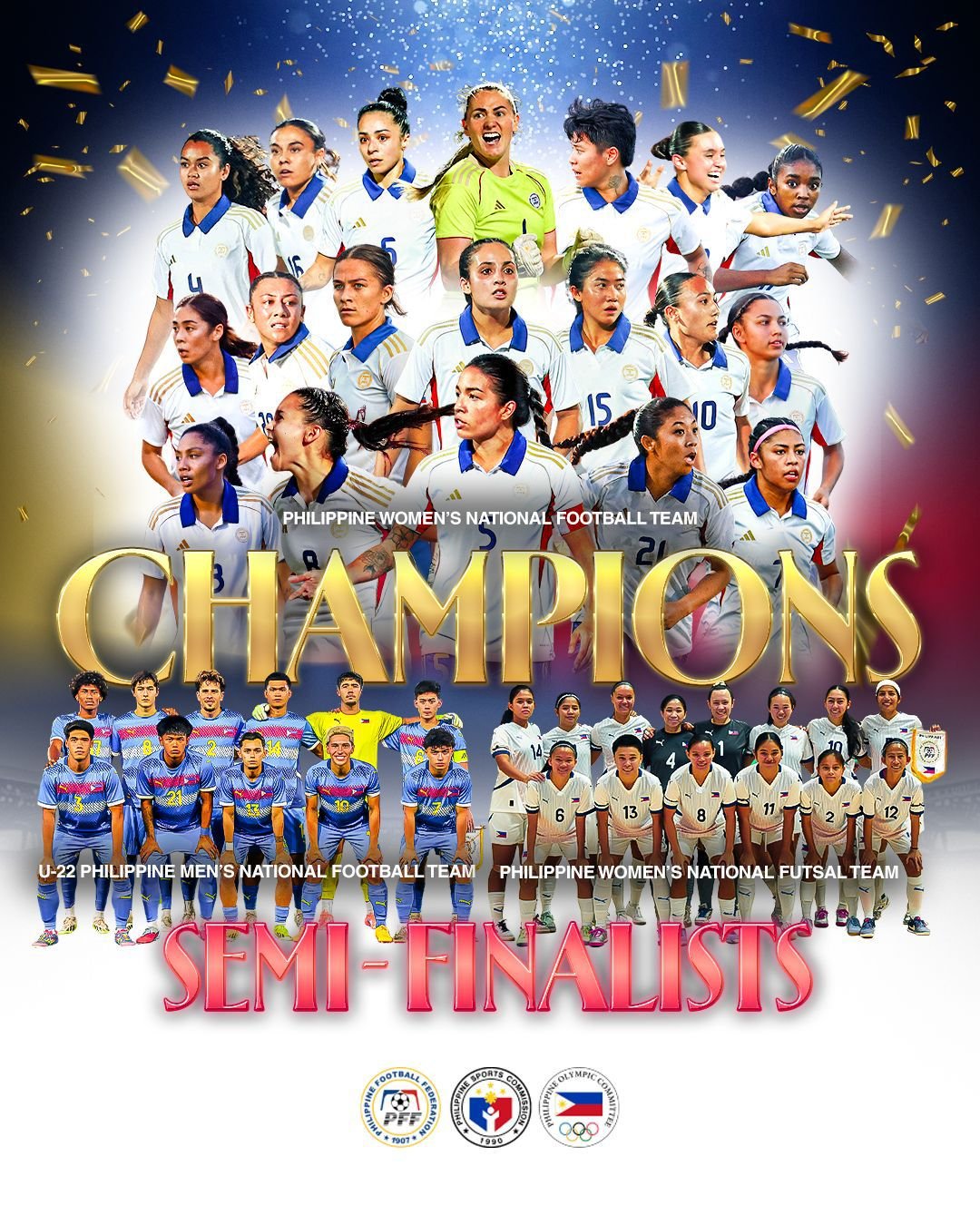
“This SEA Games campaign proved that Philippine football and futsal are no longer here just to participate—we are here to win and to be respected. From the gold medal of the Filipinas, to the historic semifinals of our men’s team, and the fearless women’s futsal performances, this is the strongest statement we have ever made as a football nation.” – PFF President John Anthony Gutierrez
The Philippines concluded its 2025 Southeast Asian Games campaign with a defining statement—one that will stand as the strongest collective performance by Philippine football and futsal teams in the nation’s history of participation in the SEA Games.
Across women’s football, men’s football, and women’s futsal, Philippine teams not only advanced deeper than ever before, but did so with conviction, competitiveness, and consistency against Southeast Asia’s traditional powers. The campaign yielded the country’s first-ever SEA Games football gold medal, a historic return to the men’s semifinals after more than three decades, and a breakthrough comeback by the women’s futsal team in the biennial meet.
Taken as a whole, the 2025 SEA Games marked a turning point—proof that Philippine football has moved beyond participation and into sustained contention.
“This is the best SEA Games performance for Philippine football,” said Philippine Football Federation (PFF) President John Anthony Gutierrez. “And it happened because our teams believed, our coaches prepared, and our players delivered.”
This was affirmed by Philippine Sports Commission (PSC) Chair Patrick “Pato” Gregorio.
“The 2025 SEA Games made one thing clear: the Philippines can now win in sports we once believed were beyond us—football most prominently among them,” Gregorio said. “It is the most followed sport in the ASEAN region, and for the Filipinas to win SEA Games gold is a major step forward.”
The sports leader emphasized, “We have always said that Filipinos can excel in football, because unlike other sports, success here is not limited by height, but by skill, discipline, and effort. The recent SEA Games proved that Philippine football can compete with the region’s best. Now the onus is on us to defend that by building on the great potential that we have seen.”
For his part, Philippine Olympic Committee (POC) President Abraham “Bambol” Tolentino, who was at the helm of the country’s mother organization of all sports associations when the Philippines won three Olympic gold medals, praised the achievements of Philippine football as well.
“This is one of the most meaningful achievements of the 33rd SEA Games, especially for women’s football. Beating Thailand and Vietnam, where football is deeply rooted, and going on to win the gold gives this result added significance,” Tolentino said.
Tolentino explained, “Alongside the Filipinas, the under-22 men’s team reached the semifinals, and the women’s futsal team recorded strong results after their World Cup appearance. Together, these performances show steady progress in Philippine football and futsal across women’s, men’s, and youth levels, built on years of support. These results add momentum to the historic gains achieved during this term and highlight how far Philippine football and futsal have come.”
Filipinas deliver historic gold
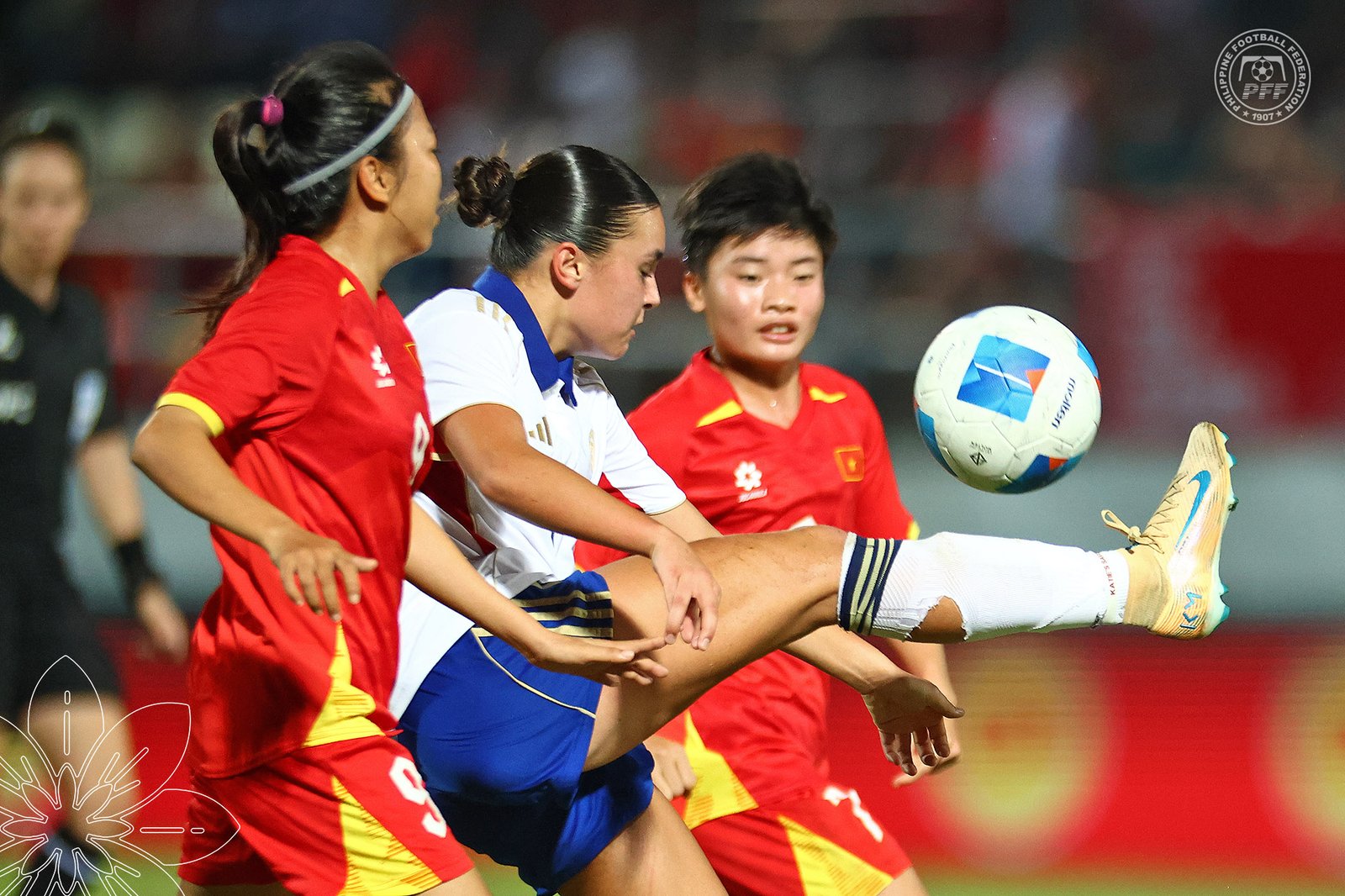
At the heart of the campaign was the Philippine women’s national football team—the Filipinas—who captured the country’s first and only SEA Games gold medal in football, defeating defending champion Vietnam in a dramatic sudden-death penalty shootout.
After a tense 0–0 draw through regulation and extra time, goalkeeper Olivia McDaniel sealed the championship with the decisive save in a 6–5 shootout victory, completing her third career penalty shootout win for the Philippines.
The gold medal capped a demanding competitive year for the Filipinas. They entered the SEA Games fresh from sweeping the 2026 AFC Women’s Asian Cup Qualifiers in Cambodia last June, narrowly missing the semifinals of the ASEAN Women’s Championship–Serenity Cup last August, and earning a hard-fought 2–2 draw against Uzbekistan during the GoTyme Match Day last October.
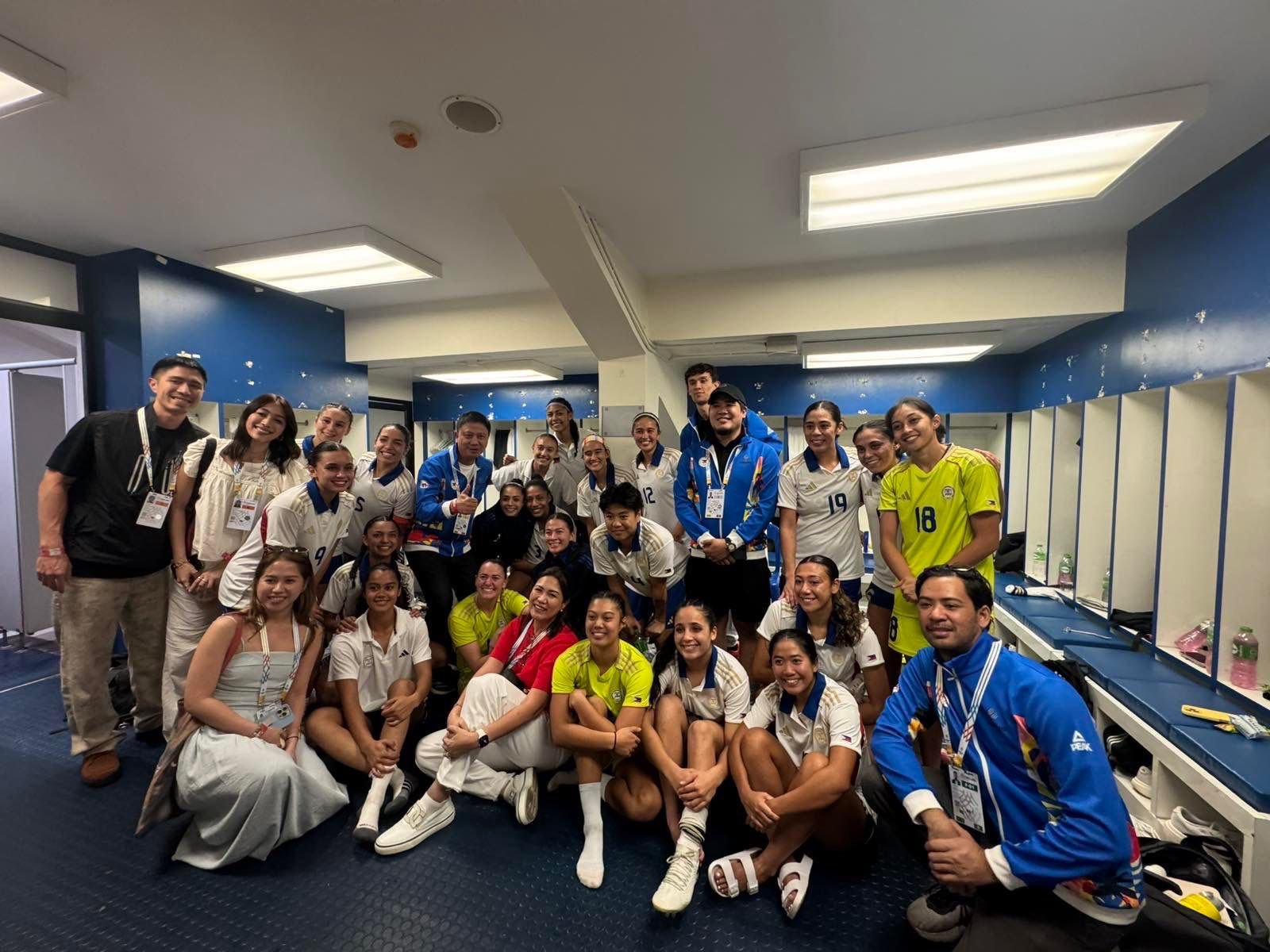
“This gold medal belongs to every single Filipina player who wore the badge with pride, courage, and selflessness throughout this campaign,” said PFF General Secretary and PWNT Head of Delegation Gelix Mercader, who awarded the gold medals to the team. “To present the medal to all 23 deserving players was deeply moving. Each one of them played a vital role in delivering this monumental achievement in Philippine women’s football.”

The SEA Games journey itself was anything but straightforward. After an opening loss to Myanmar, the Filipinas faced elimination pressure in their second group match. Salvation came deep into stoppage time through 21-year-old rookie forward Mallie Ramirez of Cebu province. Off a well-played set piece, McDaniel delivered a free kick to Hali Long, whose header reached Alessandrea Carpio. Ramirez then thundered home the rebound—her second goal in just her second international cap.
Needing a dominant win to reach the semifinals, the Filipinas responded with authority, dismantling Malaysia 6–0. Eighteen-year-old Alexa Pino led the rout with a hat-trick, confirming her seamless transition from the U-17 program to the senior squad.
In the semifinals against host nation and five-time gold medalist Thailand, the Filipinas again showed resilience. After conceding early in the second half, they equalized in the 87th minute through an ice-cold penalty from 18-year-old Jael Guy. Deadlocked through extra time, the match went to penalties, where captain Hali Long—earning her 100th international cap—converted the winning kick in a 4–2 shootout victory.
The final against Vietnam was a testament to collective excellence. Veterans and youngsters combined seamlessly. Jackie Sawicki, whose Philippine career began with a bronze medal at the 2021 SEA Games, controlled midfield tempo. Angie Beard excelled across multiple positions. Sara Eggesvik anchored transitions while absorbing physical pressure. Meryll Serrano provided creativity and composure up front.
At the back, McDaniel delivered a World Cup–level performance, combining with Long, Jessika Cowart, Sofia Harrison, and Malea Cesar to post clean-sheet victories against eight-time gold medalist Vietnam and Malaysia.
Despite the absence of several established attackers, namely Sarina Bolden, Quinley Quezada, Katrina Guillou, and Chandler McDaniel, the next generation rose to the moment. Pino showcased her attacking dynamism. Ramirez filled a crucial role with poise. Isabella Pasion played far beyond her teenage years as a tireless, fearless presence. Ari Markey and Alessandrea Carpio provided width, energy, and defensive discipline.
“The way that they displayed themselves over the last ten days was absolutely outstanding,” said head coach Mark Torcaso. “I’m so happy for them, for our fans here, and for everyone back home in the Philippines.”
Men’s U22s achieve long-awaited breakthrough
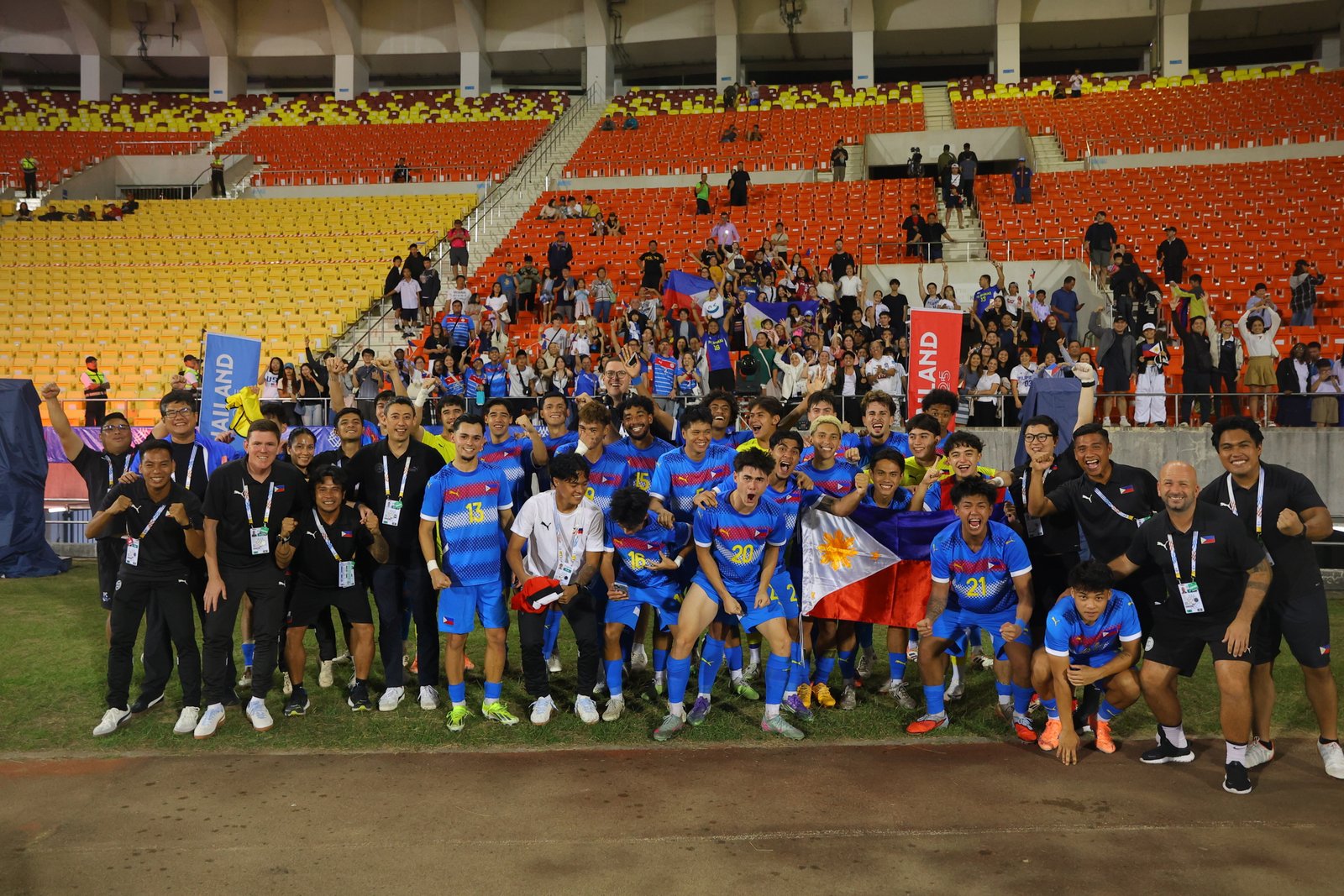
The Philippine men’s national under-22 team delivered its most successful SEA Games campaign ever, reaching the semifinals for the first time since 1991—and for the first time in the U22/U23 era.
Fielding the strongest squad ever assembled for the SEA Games, the team blended senior national team experience with a maturing youth core. Senior stalwarts Sandro Reyes, Alex Monis, Dylan Demuynck, Santi Rublico, and Javier Mariona combined with rising talents Nic Guimaraes, Gavin Muens, Otu Banatao, Noah Leddel, and Jaime Rosquillo—many of whom have been part of the PFF youth pathway for nearly a decade.

Momentum had been building throughout 2025. The squad reached the semifinals of the ASEAN U23 Championship–Mandiri Cup and finished second in the U23 Asian Cup Qualifiers, registering a winning record for the first time.
At the SEA Games, history followed. The Philippines defeated Myanmar 2–0—its first-ever U22/U23 win against the Burmese—and edged defending champion Indonesia 1–0, another program first. Banatao scored the decisive goal against Indonesia, his fifth this year, while Monis netted his first U22 goal. The team also forced critical own goals through sustained pressure.
Though the Philippines fell 0–2 to Vietnam in the semifinals—both goals coming after the 89th minute—and lost the bronze medal match 1–2 to Malaysia, the margins underscored a fundamental shift. The team was no longer overmatched.
“We used to go to these competitions just because of compliance. Now we go to win,” said Gutierrez. “Now when teams see they’re bracketed with the Philippines, it’s different.”
Filipina5 cap year with SEA Games semis
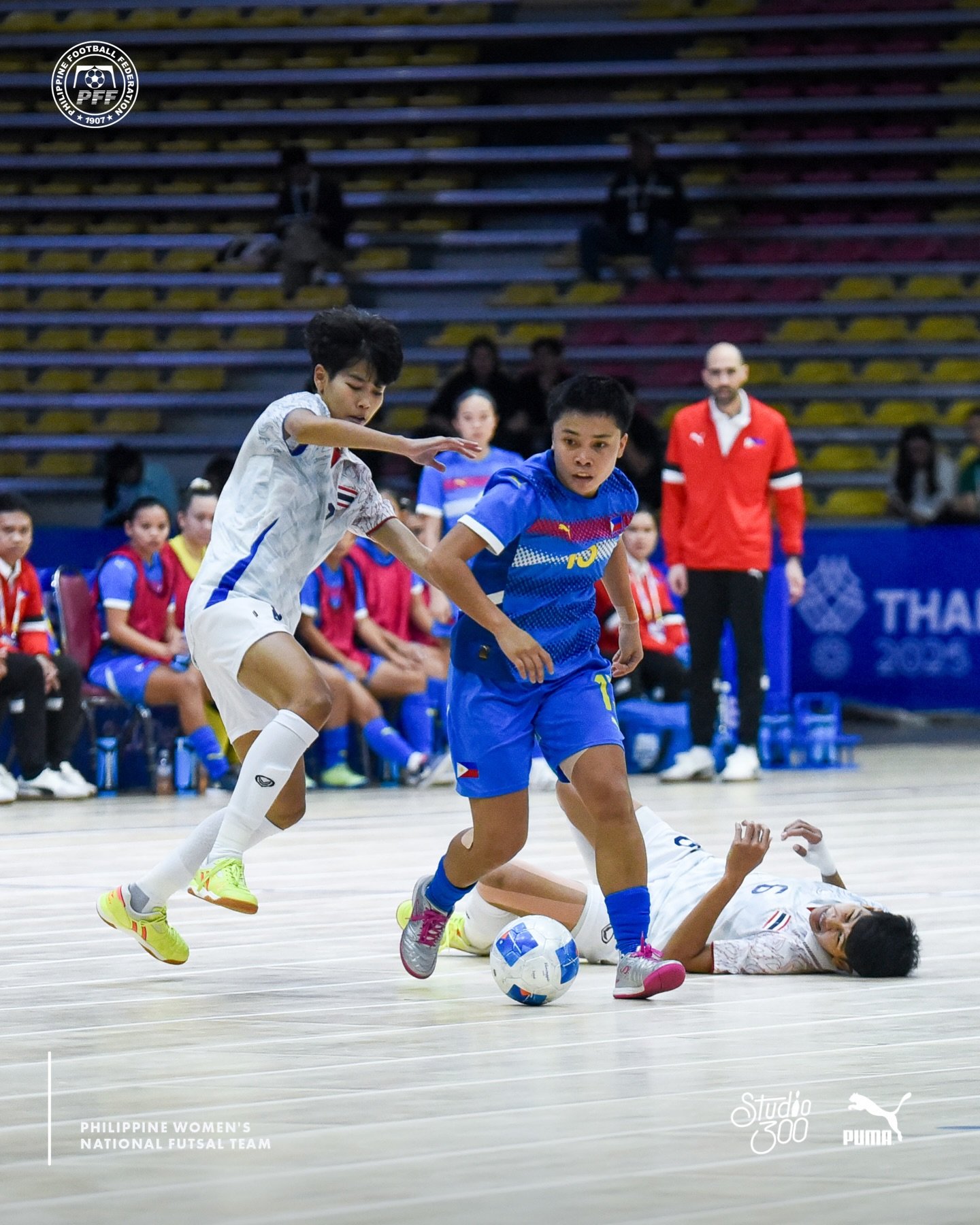
The Philippine women’s national futsal team, Filipina5, completed one of the most encouraging campaigns in program history.
Entering the tournament ranked 69th in the world—the lowest among six teams—and returning to the SEA Games for the first time since 2011, Filipina5 reached the semifinals with a landmark 3–1 victory over Malaysia. It was their first SEA Games win since 2007 and their first victory over a higher-ranked opponent since defeating Turkmenistan earlier this year.
In the semifinals, the Filipina5 pushed eventual gold medalist and world number 11 Vietnam to a 0–1 result, a significant improvement over previous encounters and reflective of growth accelerated by hosting the inaugural FIFA Futsal Women’s World Cup.
“We are very happy,” said head coach Rafa Merino. “For us it’s very important to win some games in the SEA Games, but more important is how we play and how we transmit that to the fans.”
Goalkeeper Samantha Hughes added, “Everybody put their puso on the court. This is just the beginning.”
A program built over time
President Gutierrez emphasized that the 2025 SEA Games success was not accidental, but the result of long-term planning and continuity.
“This didn’t start this year,” Gutierrez said. “We built on years of work, including the foundations laid by former PFF President Mariano ‘Nonong’ Araneta, whose efforts in development, infrastructure, and international integration helped make campaigns like this possible.”
He further noted that performance-driven credibility is now translating into tangible progress, including plans—supported by the Philippine Sports Commission, PFF, and FIFA—to build a proper football stadium at Rizal Memorial Sports Complex.
“Because of performances like this, people believe,” Gutierrez said. “And that belief turns into real support.”
Gratitude to partners and supporters
The Philippine Football Federation expresses its deepest and most heartfelt gratitude to the Philippine Sports Commission, chaired by Patrick “Pato” Gregorio, and the Philippine Olympic Committee, led by President Abraham “Bambol” Tolentino, for their overwhelming, steadfast, and genuine support throughout the campaign. Their trust, encouragement, and partnership empowered the national teams to compete with confidence and ambition on the regional stage.
The PFF likewise thanks all players who gave their all on the pitch, their parents and families, the coaches, management, and team staff, and the entire PFF workforce committed to developing Philippine football.
Sincere appreciation is extended to PFF partners and sponsors GoTyme, Puma, Adidas, Studio300, Sip and Sip Plus, AIA, Hydro Flask, and Gourmet Farms.
The Federation also thanks Filipino fans in Chonburi, Bangkok, Chiang Mai, and Samut Prakan who attended every match, as well as supporters across the Philippines and around the world who followed the teams on television, online, and through watch parties.
This campaign was more than the golden results–it was about belief restored, standards raised, and a glorious new chapter of Philippine football unfolding.