Besides the hard work and perseverance of our women’s team, this is a collective effort across the board, and across generations. We are reaping the benefits of what has been established by our fellow stakeholders and Congress members from the past administration, namely, Sir Filbert Alquiros, Coach Ernie Nierras, Sir Jeff Cheng, and of course, our former president who put all these things together, Mr. Nonong Araneta. As your current President, it is my responsibility to improve on all these foundations. Mabuhay tayong lahat. Mabuhay, ang Filipinas. – PFF President John Anthony Gutierrez to the PFF Executive Committee, March 20, 2026
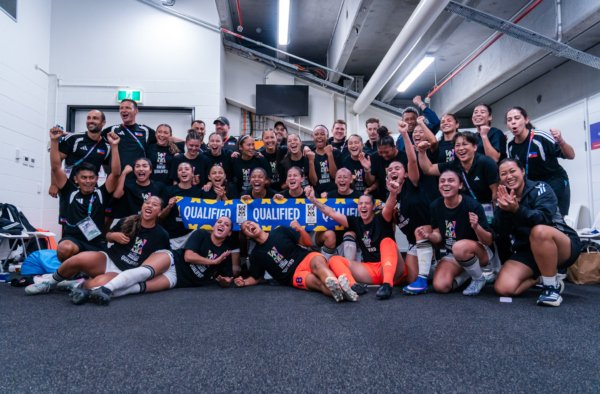
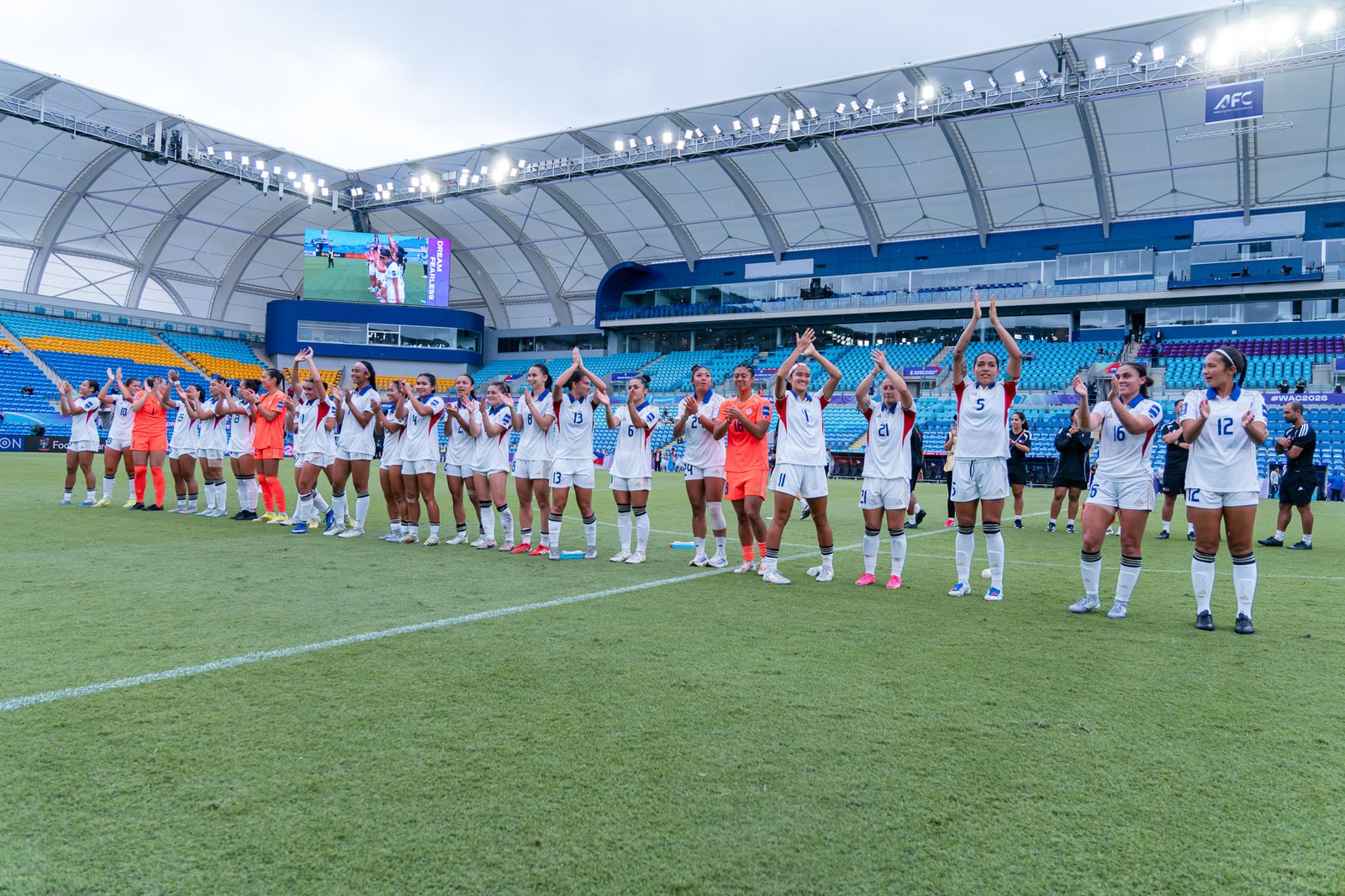
The Philippine women’s national football team has firmly established themselves among the world’s elite. Their return to the FIFA Women’s World Cup for a second consecutive time—secured through a hard-fought 2-0 victory over Uzbekistan in the 2026 AFC Women’s Asian Cup play-in—combined with their historic gold medal triumph in the 2025 Southeast Asian Games, stands as definitive proof of their quality.
These achievements were not handed to them; they were earned against top-tier opposition. The Filipinas navigated a demanding tournament path, facing regional and global powerhouses such as Australia, South Korea, and Japan. Their composure, tactical discipline, and resilience under pressure reflected a team that has matured into a genuine force in Asian football. Above all, credit belongs to the players whose belief, preparation, and execution delivered results that elevated Philippine football to new heights.
Built on foundations across generations
Yet, this success did not emerge overnight. It is the product of years of collective effort from past players, coaches, managers, and football leaders who sustained the program through periods of uncertainty and growth.
The administration led by Mariano “Nonong” Araneta, Jr., Philippine Football Federation President from 2010 to 2023, laid the foundation and supported a path to establishing a Philippine Women’s National Football Team that would be competitive in the region and beyond.
As early as 2013, under head coach Ernie Nierras and team manager Filbert Alquiros, the Filipinas—then known as the Malditas—showed promise despite falling short of qualification. That generation, led by pioneers such as Inna Palacios and Camille Rodriguez, helped establish a competitive identity.
In 2017, under coach Buda Bautista, the team returned to the Asian Cup through grit and determination, highlighted by Sara Castañeda’s crucial equalizer against Bahrain. By 2018, under Rabah Benlarbi, the Filipinas secured their first Asian Cup win in 15 years against Jordan, marking the rise of key figures like Sarina Bolden, Tahnai Annis, and Quinley Quezada.
Momentum continued in 2019 with coach Let Dimzon and team manager Jeff Cheng, as the Filipinas reached new regional milestones. The breakthrough came in 2021 and 2022, when, under Marlon Maro in the qualifiers and later Alen Stajcic starting with the 2022 Asian Cup, the team secured its first-ever FIFA Women’s World Cup qualification and won the ASEAN Women’s Championship, alongside a SEA Games bronze and Asian Games quarterfinal finish.
These milestones were built through the contributions of countless individuals—players, staff, and administrators—who carried the program forward year after year.
Leadership and the responsibility to elevate
While honoring the past, the current Philippine Football Federation (PFF) leadership has played a crucial role in ensuring that the Filipinas continue to evolve. Under PFF President John Anthony Gutierrez, the Federation has emphasized continuity while introducing governance reforms, stronger development systems, and a clearer long-term vision with special focus on women’s football and futsal development.
The result is a Filipinas team that has not only sustained Asian Cup and World Cup success, but has earned new milestones such as the country’s first SEA Games football gold; the return of the Filipinas U17 to the U17 Women’s Asian Cup via a qualification clean sweep; and the strengthening of the women’s futsal team that has impressed in the FIFA Futsal Women’s World Cup, the AFC Women’s Futsal Asian Cup, SEA Games, and the recent ASEAN Women’s Futsal Championship.
This ethos—recognizing the past while ensuring to improve and innovate—captures the essence of the Filipinas’ journey. Their success today is both a culmination and a continuation: a testament to what has been built, and a commitment to reaching even greater heights in the years ahead.