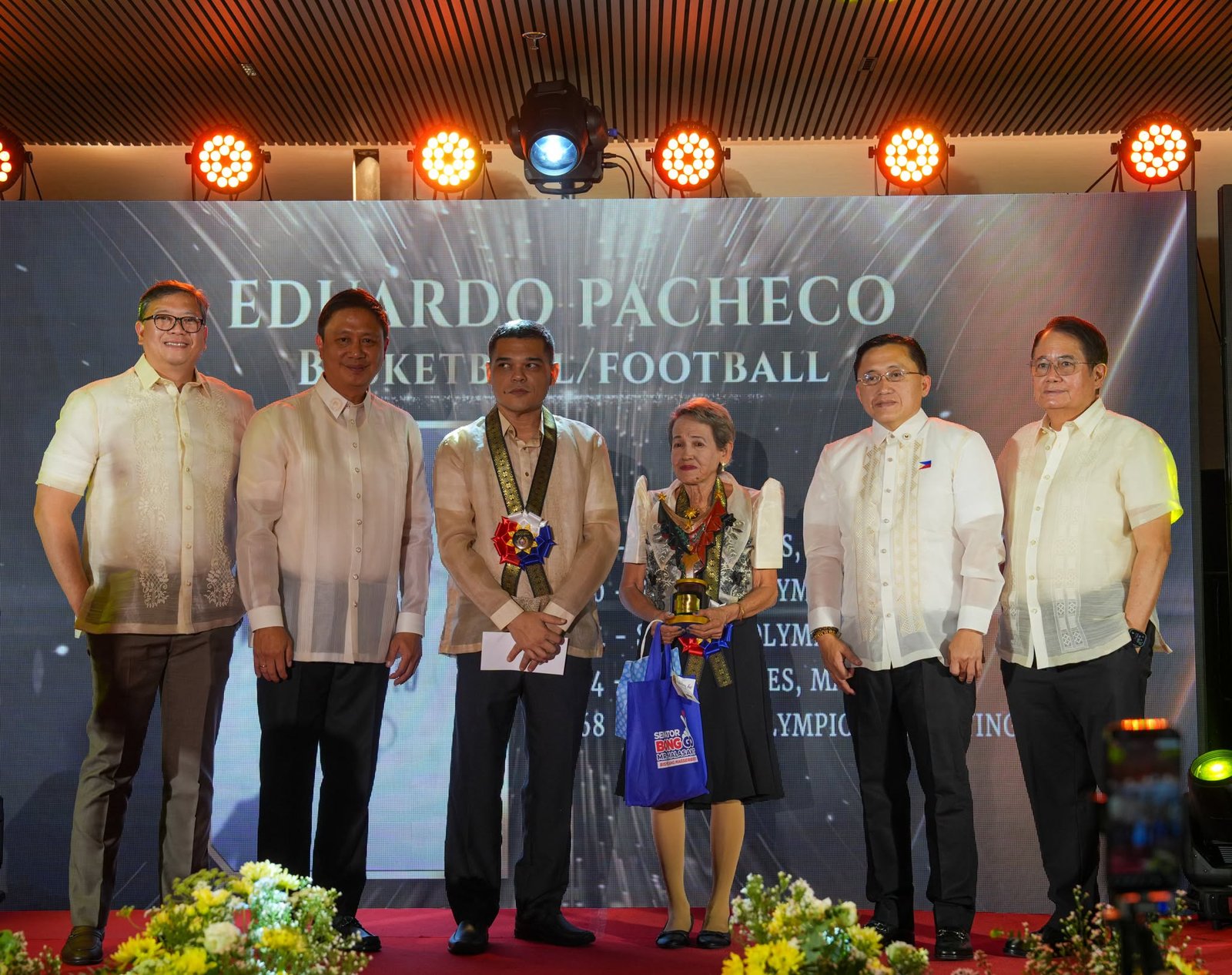
The Philippine Football Federation (PFF) joined the nation in celebrating the life and extraordinary legacy of the late Eduardo “Eddie” Pacheco on June 20, as the Filipino football pioneer was inducted into the Philippine Sports Hall of Fame Class of 2026 at the PSC House in Malate, Manila, becoming only the second footballer in history to receive the country’s highest sporting honor.
The induction was attended by PFF President John Anthony Gutierrez, who co-presented the enshrinement to Pacheco’s family, alongside co-presentors Philippine Sports Commission (PSC) Chair Patrick “Pato” Gregorio, Samahang Basketbol ng Pilipinas Chair Ricky Vargas, and Senate Committee on Sports Chair Bong Go.
For PFF, Pacheco’s enshrinement carries particular resonance. His induction into the Philippine Sports Hall of Fame followed the legendary Paulino Alcantara, who was honored in the Class of 2021.
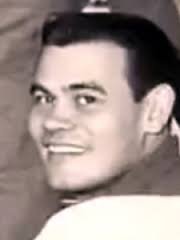
Eddie Pacheco (Photo from Wikimedia Commons)
President Gutierrez reflected on the profound significance of the occasion for Philippine football.
“Eddie Pacheco represents the soul of Philippine football at one of its earliest, a young man who wore the national colors with distinction,” Gutierrez said. “By immortalizing his contributions in the Hall of Fame, we ensure that every generation of Filipino footballers knows the giants on whose shoulders they stand.”
Gutierrez added that honoring pioneers like Pacheco is inseparable from the PFF’s broader mission to build a proud and enduring football culture in the country.
“Our modern ambitions are only meaningful if we remember where we came from,” he said.
Sir Eddie’s story — his courage, his versatility, his love of country — is the foundation on which Philippine football must continue to rise.
Pacheco, who passed away on December 9, 2009 at the age of 73, was one of seven inductees selected from a nominee list of 75 sporting greats. He was enshrined alongside PBA legend and former PSC Commissioner Ramon Fernandez, Olympic boxing silver medalist Onyok Velasco, taekwondo and gymnastics great Bea Lucero, Paralympic powerlifting bronze medalist Adeline Dumapong-Ancheta, former ATP world number 72 Cecil Mamiit, and decorated trackster Isidro del Prado.
Born into a footballing family as the son of Filipino football legend Emilio Pacheco, Eddie wrote his own chapter in Philippine sporting history with a career that defied easy classification. He was, in the truest sense, a multi-sport phenomenon — an athlete who not only competed in football and basketball at the international level, but reached the summit of both.
Educated at San Beda College and later the University of Santo Tomas, where he pursued a degree in architecture, Pacheco first wore the Philippine colors on the football pitch.
At just 18 years old, he earned a place in the national football team for the 1954 Asian Games held at the Rizal Memorial Stadium. He announced himself to Philippine football with a goal against South Vietnam, and the Philippine Sportswriters Association (PSA) duly recognized his emergence by naming him Mr. Football in 1954.
His transition to basketball was a consequential pivot in the sport’s local history. Pacheco became a cornerstone of Philippine basketball’s golden era, representing the country at the 1960 Rome Olympics, where the national team finished 11th in the world.
Two years later, he was a proud member of the Philippine squad that captured gold at the 1962 Asian Games, considered as one of the most dominant Philippine basketball national teams, not only in Philippine history, but in Asia. That same year, PSA named him Most Outstanding Basketball Player. He added another gold medal to his collection at the 1963 ABC Championship in Taipei.
Playing in the MICAA for the 7Up Bottlers, Ysmael Steel Admirals, YCO Painters, and U/Tex Weavers, Pacheco was a decorated and respected figure in Philippine club basketball until his retirement from competitive play in 1973.
Yet football was never far from his heart. In September 1967, at the age of 31, Pacheco returned to the international pitch for the 1968 Summer Olympics qualification campaign, scoring for the Philippines against Lebanon in Tokyo — a final, fitting testament to a footballer who never truly left the game.
Beyond football and basketball, Pacheco was also a bowler, swimmer, volleyball player, and track and field athlete. In his post-playing years, he served as a Senior Administrative Officer and later PSC consultant under Executive Director Dr. Lucrecio Calo, devoting his later life to the institution that now permanently honors his name.
PSC Chairman Gregorio paid an impassioned tribute to Pacheco during the ceremony, calling him among the rarest athletic talents the Philippines has ever produced.
“He was named ‘Mr. Football’ in the 1950s,” Gregorio said, “transitioning to basketball and helping lead the Philippines to Asian Games glory in both basketball and football. Sir Eddie, mabuhay po kayo at ang pamilya niyo.”
Accepting the honor on behalf of the family, son Emilio Pacheco, Jr. offered a deeply personal reflection on his father’s character and convictions.
“He was a simple man and wasn’t fond of the spotlight. He was a competitor, a teammate, and above all, a proud Filipino,” the younger Pacheco said.
He believed that representing the country was the highest honor an athlete could receive.
He described his father as a product of a generation that competed not for personal gain, but for the honor of wearing Philippine colors before the world, calling the induction a “recognition of a lifetime devoted to excellence, sportsmanship, and service.”
“Eddie Pacheco may no longer be with us today, but his legacy lives on in every athlete who dares to dream, in every Filipino who proudly wears the Philippine flag on their uniform, and every young person who dreams that greatness is achieved through hard work, humility, and love of country,” Pacheco, Jr. said.