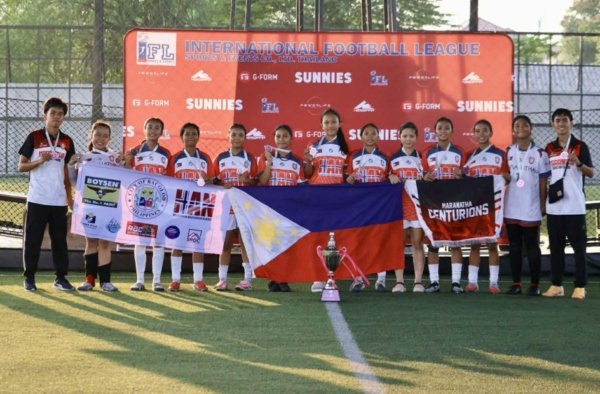
Youth competitions are coming back to life across the country as the Philippine Football Federation (PFF), through its 39 Regional Football Associations (RFAs), kicked off the RFA Youth League (RFA YL) in August 2026 — a nationwide grassroots competition drawing in 10,000 players all over the archipelago for the Under-11 and Under-13 age groups in 8v8 football and futsal, running until November 2026.
A total of 618 teams from Luzon, Visayas, and Mindanao have begun the inaugural nationwide competition, with more teams playing this September.
Luzon accounts for 225 teams, with 98 entries in the U11 category and 127 in U13. The Visayas has 125 teams, composed of 58 U11 and 67 U13 sides, while Mindanao leads the country with 268 participating teams—130 in U11 and 138 in U13.
The scale of participation underscores the strong demand for regular youth competitions and reflects the PFF’s effort to bring organized football back to communities across the country. Rather than limiting youth development to training programs and occasional tournaments, RFA YL gives young players a consistent competitive environment where they can gain experience and measure their progress against their peers.
PFF President John Anthony Gutierrez said the revival of youth competitions is central to building a stronger and more sustainable football pathway in the Philippines.
“The RFA Youth League is about bringing youth competitions back to the communities and making sure that young players in every region have a real, structured chance to play and to be seen,” Gutierrez said. “We are giving our regional associations the tools and the support to run consistent competitions, and in turn, we expect a clearer picture of the talent coming up across the country.”
RFA YL also strengthens the role of the RFAs as the foundation of the country’s football development system. With competitions being conducted closer to where young players live and train, the league allows more children to experience organized football while giving coaches and regional associations greater opportunities to identify and nurture emerging talent.
Significance to the player pathway
The program falls under the FIFA Talent Development Scheme (TDS) and is designed to give young players more regular playing opportunities while establishing a structured pathway for talent identification across the country.

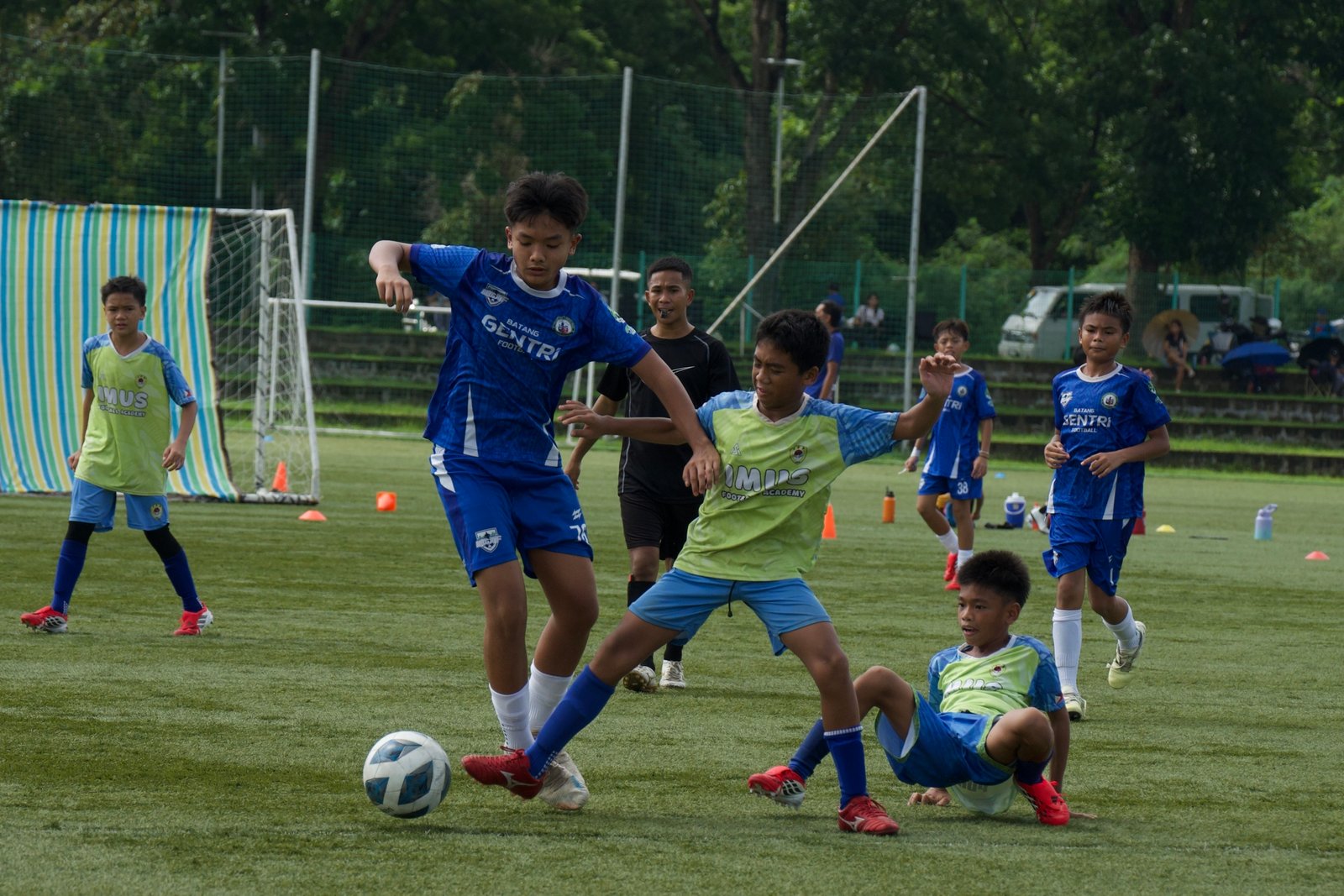
The RFA Youth League is an inclusive space for boys and girls. Pictured here is an under-11 girl player from Imus, Cavite.
“TDS gives us a framework to make sure talent identification isn’t left to chance,” Gutierrez said. “Through the RFA Youth League, every region now has a consistent competition to draw from, so we’re not just hoping to find players, we’re building a system that finds them.”
Gutierrez said the league’s design, particularly its reporting and monitoring requirements, is meant to build long-term systems rather than one-off events.
“We are building habits of documentation, player monitoring, and coordination between the RFAs and the national federation, so that whoever is identified through this league has a defined pathway forward, whether that’s the Center of Development or the youth national team pool,” he said.
Broader push for small-sided football
The RFA Youth League’s emphasis on 8v8 football and futsal builds on a development campaign PFF has pursued since the beginning of President Gutierrez’s administration, positioning small-sided formats as a key entry point for young players into the sport.
That campaign included PFF’s push to introduce 8v8 football into the 2026 Palarong Pambansa, marking the format’s debut in the country’s premier national school-based athletic competition, as well as the Philippines’ hosting of the 2025 FIFA Futsal Women’s World Cup, which brought elite-level futsal competition to a domestic audience for the first time. Both initiatives were aimed at widening exposure to and participation in these formats at different levels of the football pyramid.
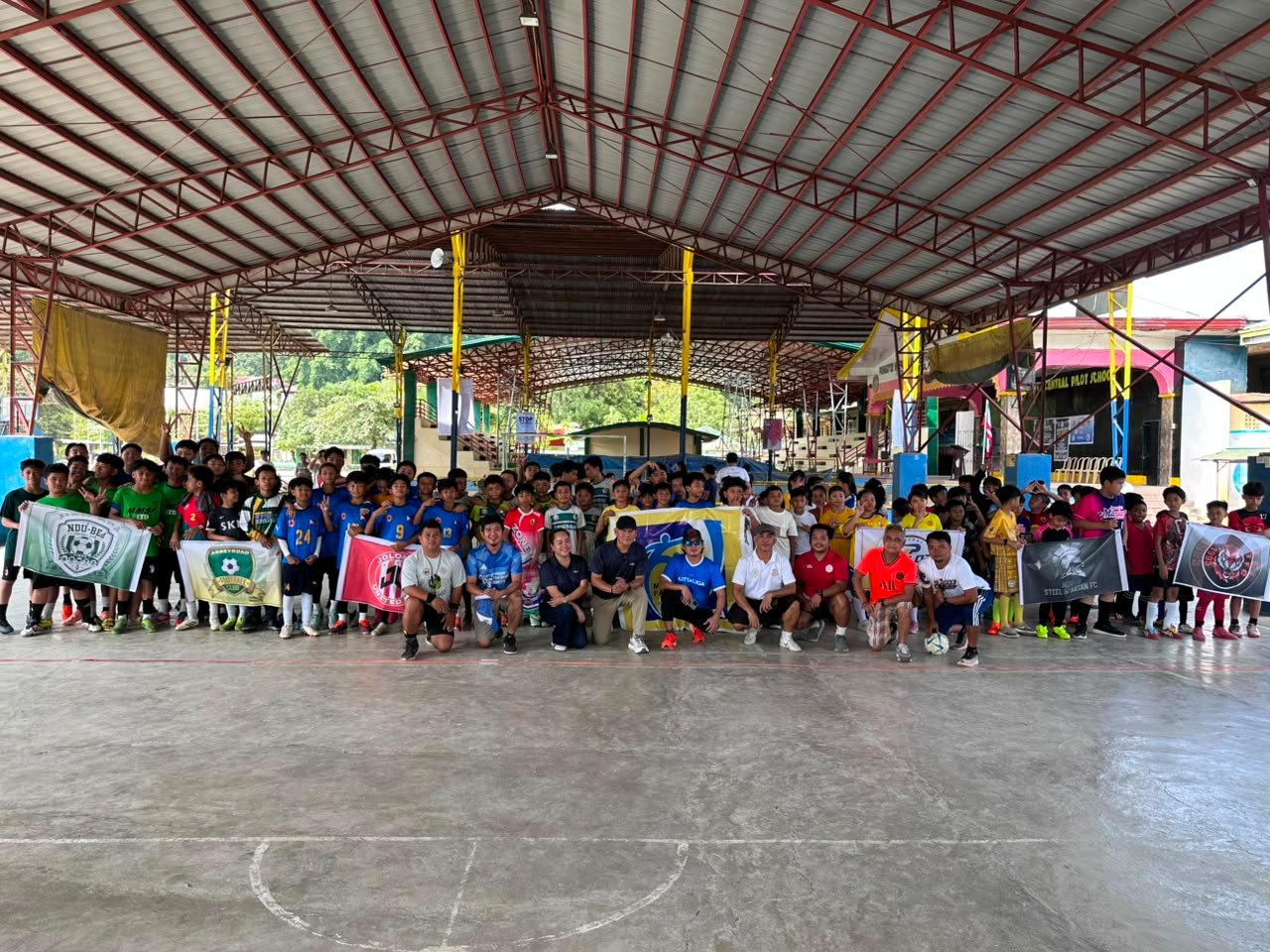
The Maguindanao RFA Youth League features a U13 futsal tournament comprised of 8 teams. (Photo from MRFA)
By anchoring the RFA Youth League to the same 8v8 and futsal formats, PFF is extending that campaign down to the grassroots level, where facilities and resources vary widely across regions. The approach reflects Gutierrez’s continued view that small-sided games lower the barrier to entry for young and beginner players while still building the technical foundation needed for later development.
Voices from RFAs
For Cavite RFA (CAREFA) President Perry Camba, the league carries particular significance, as it marks the province’s first tournament as a full-fledged PFF member. CAREFA was formally admitted as a regular PFF member in the 23rd PFF Congress last May 2026.
Camba described Cavite’s participation in the nationwide rollout as a source of provincial and national pride.
“Cavite being part of the whole national program of the Philippine Football Federation is actually, I can say, a pride for the Caviteños that we were able to become part of something that will change the entire landscape of football in the Philippines,” he said.
In Camarines Norte, REFACAMNOR FDO Mark Oco echoed the sentiment, citing the league’s role in expanding scouting opportunities at the grassroots level.
“We at REFACAMNOR are very happy with PFF’s initiative. As a Football Development Officer, I’m glad that we can provide more grassroots competitions where we can develop and scout potential players,” Oco said.
He added that the league addresses a longstanding gap in exposure for homegrown talent.
“It is very important because there are many homegfutrown talents who remain unnoticed due to lack of exposure and competitions. Empowering RFAs gives these players more opportunities to be discovered and developed,” Oco said.
Central Bicol RFA FDO Russel Brondo said the league’s grassroots focus carries significance beyond the region, calling it a bridge between community-level competition and the national team pool.
“The PFF’s program especially to the grassroots with the RFA YL is indeed a massive move with big impact to the Filipinos especially in football. As the RFAs being the forefront of this initiative this will effectively put an impact and will bridge the development of young Pinoy talents from grassroots towards being the bearer of the national color in this sport,” Brondo said.
He added that entrusting implementation to the RFAs themselves widens access for athletes in underserved areas.
“As this program was entrusted and handled by the RFAs, this will surely make the program a success and will eventually open doors to those aspiring young athletes and pave the way for them to have access to participating in the league especially those who are from far flung areas,” he said.
In the Province of Bohol, RFA FDO Jade Tuyogon said the league reflects RFAs’ proximity to the communities they serve.
“Our RFA really appreciates PFF’s initiatives of asking RFAs to conduct the RFA Youth League. Being at the forefront of grassroots football is both an honor and a responsibility. We are happy to be part of PFF’s goal in developing young footballers in our country,” Tuyogon said.
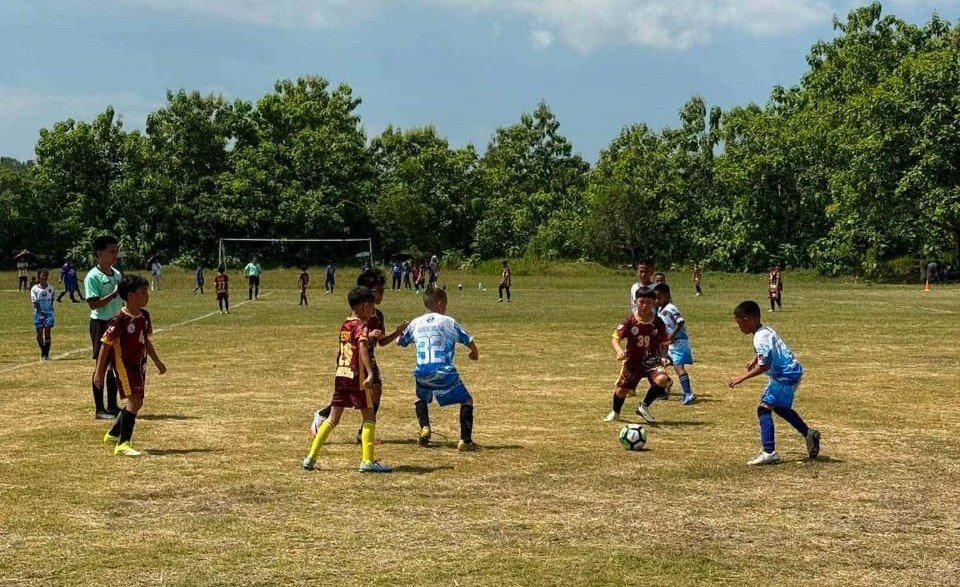
RFA Youth League U11 8v8 action in Bohol. (Photo from PBRFA)
He added that RFAs serve as the critical link between national programs and local implementation.
“It is very important because RFAs are closest to clubs and communities. RFAs are the ones who implement many of the programs at the local level with the direction and support of PFF,” he said.
Meanwhile, Negros Oriental-Siquijor RFA Deputy General Secretary and FDO Earl Rodani Villariza called the league a significant step for the sport nationwide.
“I think the RFA Youth League is a big step forward for Philippine football. Putting RFAs at the forefront makes a lot of sense because we are closest to the players, schools, and communities,” Villariza said.
He pointed to the league’s age-appropriate formats as key to player development.
“By running age-appropriate formats like 8v8 football, futsal, and beach football, we give kids more touches, more game time, and a pathway that fits their age and development. It feels empowering and exciting that RFAs are now leading this charge. It brings football closer to home and makes the sport more accessible across the regions,” he said.
Villariza also underscored the importance of grassroots empowerment for long-term sustainability.
“It’s very crucial. Sustainable growth starts from the ground level and going up. When PFF empowers RFAs with structure, support, and trust, we can tailor programs to our local needs while staying aligned with the national vision. RFAs know at the ground level the schools, LGUs, and partners in our area, so we can build consistent leagues, train more coaches, and identify talent early. This empowerment ensures that youth and grassroots football isn’t just a one-off event, but a continuous system that feeds into the future of Philippine football,” he said.
In the Bangsamoro Region, Maguindanao RFA President Cabili Sinsuat said PFF’s financial support was decisive in making the league possible for the province.
“We appreciate this initiative from the PFF administration. It gave us the chance to organize this kind of event. With the financial support given to us, it made [the] impossible to be possible,” Sinsuat said.
He explained the RFA’s format choices were shaped by player experience level and alignment with existing school programs, noting that in their RFA, the U13 category uses 8v8 to align with the Department of Education’s program, while U11 plays futsal to suit beginner players.
“On our part, we choose to have the 8v8 for our U13 to align in the DepEd program, [which] can help our members better understand this new format. Our U11 is futsal, the majority of the teams are beginners, it suits them, plus parents appreciated this program given by the PFF,” he said.
Aim
The league is meant to address the gap in consistent, regular competitions for young players at the regional level, particularly in areas where playing opportunities have been limited or informal.
By decentralizing implementation to the RFAs while keeping talent identification tied to PFF’s national pathway, the program aims to widen the base from which players can be scouted and monitored over time, rather than relying solely on centralized tournaments.
Mechanics
RFAs in good standing are eligible to organize the league within their respective jurisdictions, fielding 8 to 14 teams per age category over a 13-week, round-robin competition period.
RFAs will have the flexibility to choose from three small-sided game formats — 8v8 football and futsal — depending on the facilities and resources available in their regions. An RFA without access to a football field, for instance, may opt to run its league through futsal instead. The approach is aligned with Gutierrez’s vision of developing small-sided games among youth and grassroots players as a foundation for the country’s overall football development.
PFF’s tournament regulations serve as a general guide for implementation and RFAs may adapt or modify certain provisions to fit local conditions, provided these remain aligned with the overall objectives and policies of the Federation.
The competition will follow a round-robin format, with all participating teams playing against each other. Teams will be awarded three points for a win, one point for a draw, and zero points for a loss, with the team accumulating the highest number of points at the end of the league declared champion. In case of a tie, rankings will be determined by goal difference, total goals scored, head-to-head result, and, if necessary, a coin toss or drawing of lots.
Participating RFAs are required to report on the distribution and use of FIFA Football for Schools balls, submit lists of players identified for scouting along with their profiles and videos, and comply with PFF’s child safeguarding and reporting standards throughout the season.
PFF will provide RFAs with schedule templates, registration platforms, and official certificates, trophies, and medals to support implementation, while monitoring compliance with competition rules, safeguarding policies, and financial liquidation requirements throughout the season.
Timeline
As part of the preparation process, PFF held a two-day online orientation on July 23-24, 2026, attended by RFA presidents, general secretaries, and their designated Football Development Officers (FDOs), where the objectives, competition guidelines, and implementation procedures of the league were discussed. The orientation drew a positive response from participating RFAs, an encouraging early sign as the league moves toward kickoff. A coaches’ and referees’ workshop followed on July 30-31.
The competition will run through Match Week 13 at the end November 2026, capped by closing and awarding ceremonies before RFAs submit their final reports in the following weeks.