With Philippine women’s football experiencing the most successful period in its history, the Philippine Football Federation (PFF) completed the final session of the PFF Women’s Football Strategy Workshop on 24 November, concluding a four-part series designed to transform achievements into a unified, long-term national strategy.
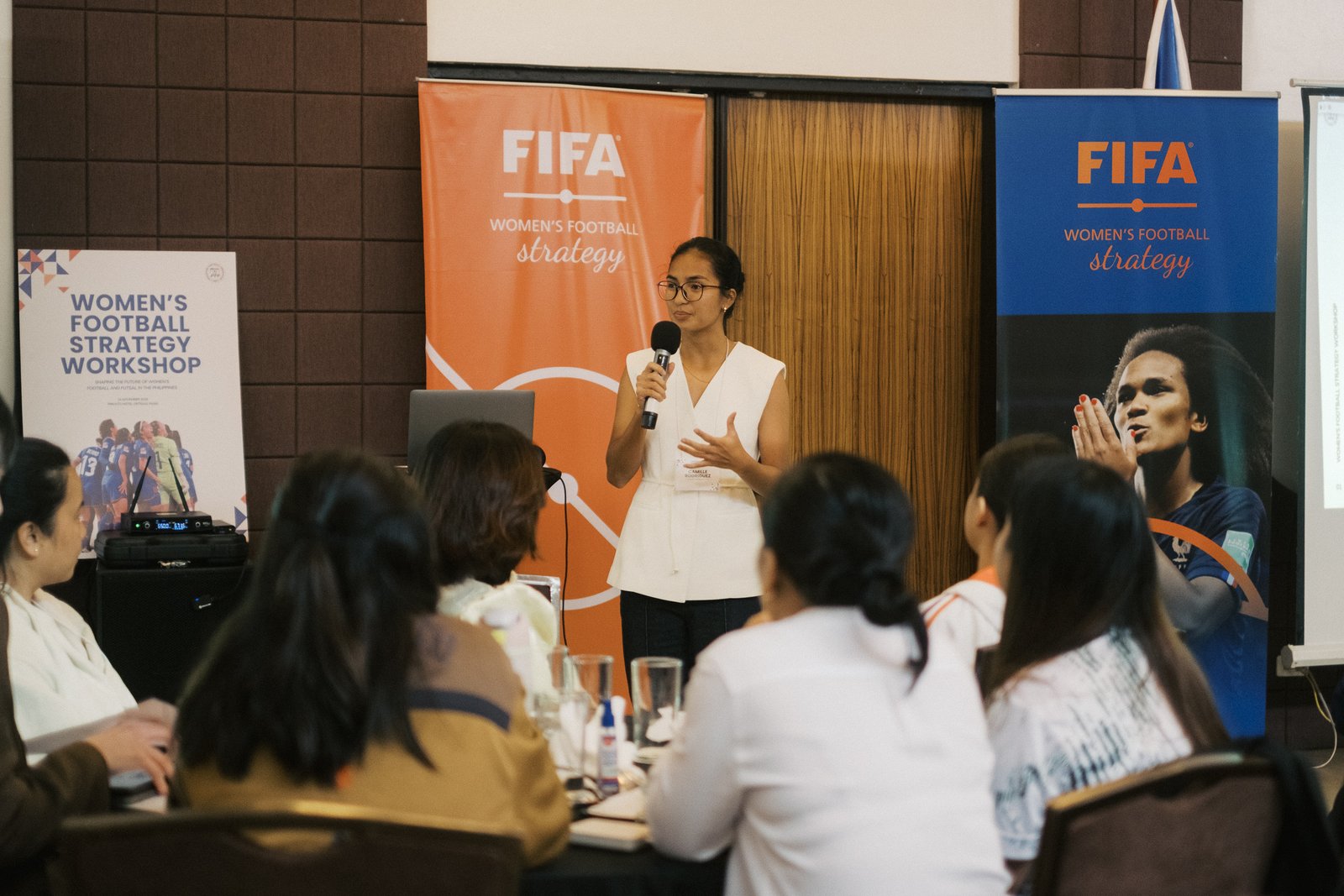
The workshop, aligned with FIFA’s Women’s Football Strategy – Football Unites the World: Strategic Objectives for the Global Game, was led by PFF Head of Women’s Development and former national team veteran Camille Rodriguez, Arijana Demirović (FIFA Head of Development in Women’s Football Division), and Simon Toselli (FIFA Technical Expert) as co-facilitators.
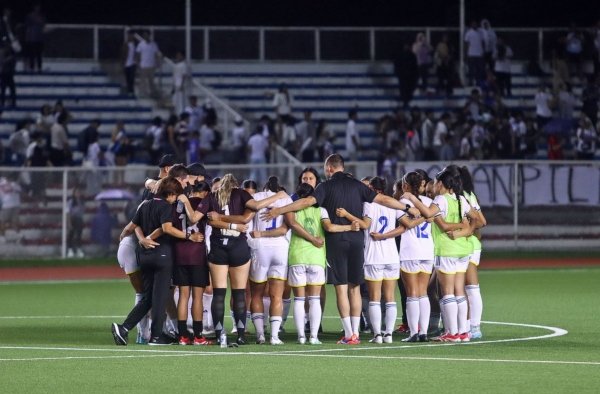
Over the past decade, the Philippines has reached the 2023 FIFA Women’s World Cup, earned spots in three straight AFC Women’s Asian Cup finals, qualified for consecutive AFC U17 Women’s Asian Cup finals, and hosted and participated in the inaugural FIFA Futsal Women’s World Cup. These milestones now set the stage for the next challenge: building a cohesive national strategy that strengthens pathways, expands participation, and builds a vibrant and sustainable women’s football and futsal ecosystem across the country.
Rodriguez emphasized that these gains carry both momentum and responsibility.
“With the sport evolving so quickly and with everything we’ve achieved, there was a need to revisit our game plan and elevate it,” she said. “That is why we engaged as many stakeholders as possible—to hear their challenges, their opportunities, and their vision.”
Strategy grounded in collaboration
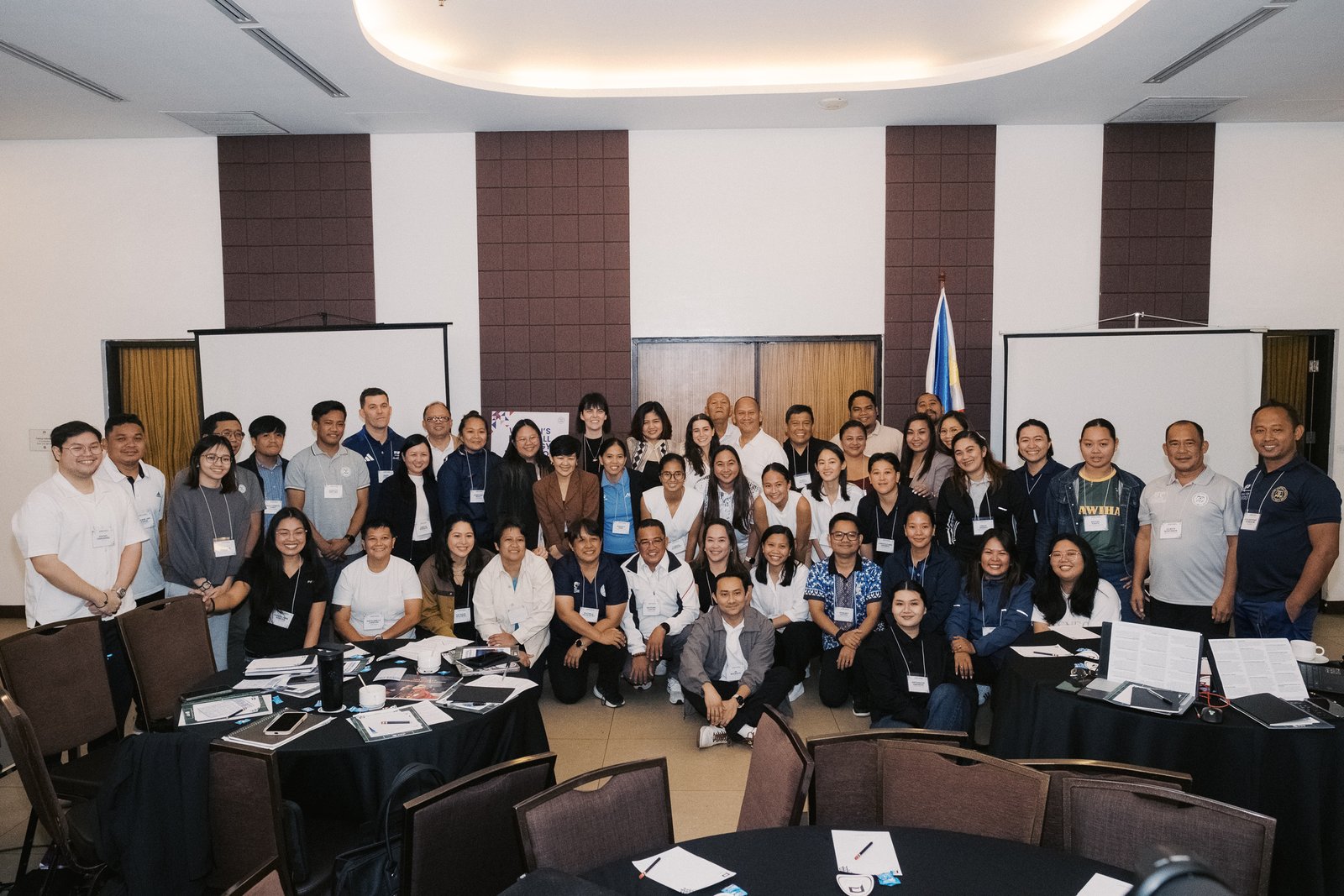
The workshop’s structure was intentionally inclusive, with PFF’s Regional Football Associations (RFAs), participating across the online and in-person sessions. The in-person workshop brought together leaders from RFAs, clubs, women’s football coaches, national team players, administrators, academy directors, community leaders, and PFF officials.
“It was really good to come together and share more ideas, try to understand what are some of the challenges within different regions,” Demirović said, describing the process as both comprehensive and empowering.
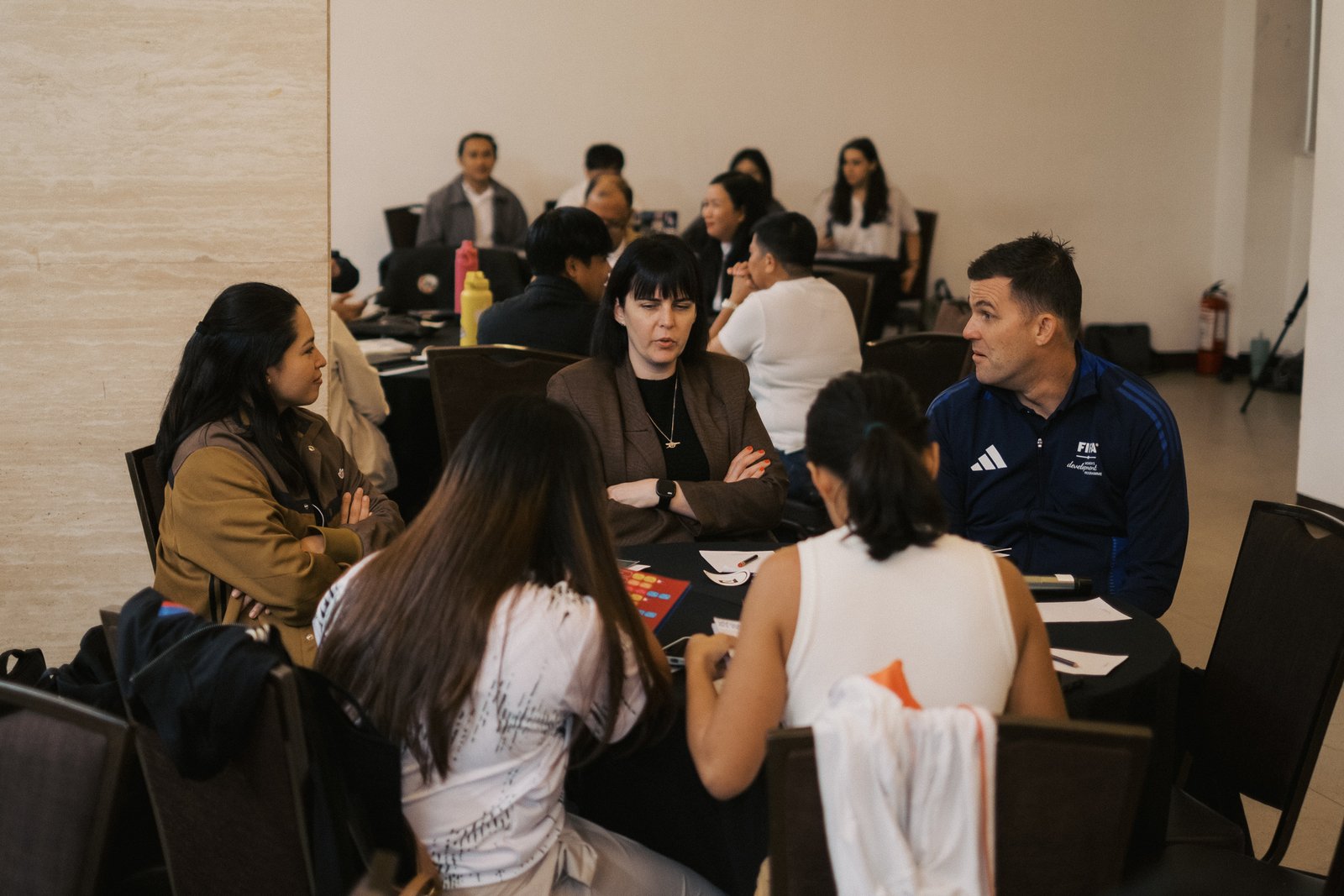
She noted that the Philippines’ recent achievements were reflected in the passion of the community itself: “What is really empowering and positive is that there is a lot of work already going on in all parts of [the] Philippines. There’s a lot of passionate people in the regional associations, in the clubs, a lot of female coaches, [and] former players that are willing to give more to the game.”
The collaborative sessions also drew praise from Toselli, who highlighted the value of integrating local insights into strategy formation.
“I thought it was a very positive and dynamic process,” he said. “We have been collaborating online because PFF wanted to include the key stakeholders into the strategy. And today was the final step… so that they can share their experience, their expertise, their ideas and we can understand their environments.”
According to Toselli, this inclusive method is essential for shaping national direction “so that we can define the national vision, the mission, and the key strategic goals for later. It was a very positive process to onboard everyone and collectively build a strategy. We got plenty of new ideas from this process.”
In line with FIFA’s global pillars on participation, pathways, governance, visibility, and commercial growth, the workshop discussions centered on expanding girls’ grassroots access, increasing opportunities for women coaches and referees, strengthening competition structures, improving facilities, accelerating digital visibility, and ensuring that pathways from grassroots to elite are clear and accessible.
Rodriguez reiterated the need for stronger coaching development as a fundamental pillar.
“There was a strong rhetoric in the workshop: To develop better players, we need to develop coaches as well,” she noted. “There’s a strong desire to develop female coaches, administrators, and male allies in the women’s football space.”
Another major component was the nationwide “infrastructure inventory,” which gathers data on fields, facilities, girls’ teams, women’s teams, clubs, coaches, referees, and competitions.
“When you build an ecosystem, every part is unique,” Rodriguez said. “Our strength as a country is our diversity.”
Leveraging momentum, preparing for the next era
The workshop served as a key pillar of the legacy program of the inaugural FIFA Futsal Women’s World Cup hosted by the Philippines, marking a pivotal moment to leverage the sport’s rising momentum. For Rodriguez, this convergence of milestones—including the Filipinas’ historic 2023 FIFA Women’s World Cup appearance, multiple AFC tournament qualifications, and the nation’s first futsal world cup hosting—created a rare opportunity to establish a unified, long-term development roadmap.
Rodriguez emphasized that the challenge now is to transform momentum into structure.
“When you reach such a historic event like a World Cup, the next question is: how do we prepare for the growth that follows? The interest is there, the love for the sport is there. Now we need a strategy—a game plan—to harness that momentum,” she said. She cited the nationwide Filipina Five Futsal Fiesta, delivered with FIFA support, as an example of scalable, inclusive programming that engaged all 32 RFAs and brought 290 women futsal players and 58 coaches to Manila for an immersive, world-class experience.
Toselli highlighted the global context: the rapid rise of women’s football and its expanding societal resonance.
“Women’s football has had exponential growth. It’s now more visible, we have more fans, more sponsors, more broadcasters,” he noted. “That brings opportunities not only on the field but off the field. Women can join the game to become a better citizen, a better person. It’s endless opportunities.”
Demirović echoed this perspective, stressing that the Philippines already has a strong grassroots foundation.
“There is a lot of work already going on in all parts of the Philippines. There are passionate people in RFAs and clubs—female coaches, former players—willing to give more to the game,” she said. She added that the process will help the federation access available FIFA programs and “create more pathways for girls and women in the Philippines.”
Demirović emphasized football’s transformative impact, especially as seen during the Philippines’ two World Cup stints in women’s football and women’s futsal.
“We saw how much it meant to younger girls to see someone who looks like them representing them, allowing them to dream that one day that can also be them,” she said. Beyond players, she noted that football can open opportunities for referees, coaches, administrators, and young women seeking education, visibility, and leadership roles.
With the workshop concluded, the PFF will now consolidate outputs from all four sessions and prepare a unified Women’s Football Strategy for presentation to the Executive Committee and Congress ahead of its targeted 2026 launch. Rodriguez highlighted that the strategy’s success will rely on sustained collaboration.
“Stakeholders need to know their role. Investors need to see the vision. The strategy must be relevant, inclusive, and connected—from local realities to national direction, and back again,” she said. “The passion of the people in Philippine women’s football is real, and it gives us confidence that through collaboration, clarity, and commitment, we can build a stronger, more unified women’s football future.”