
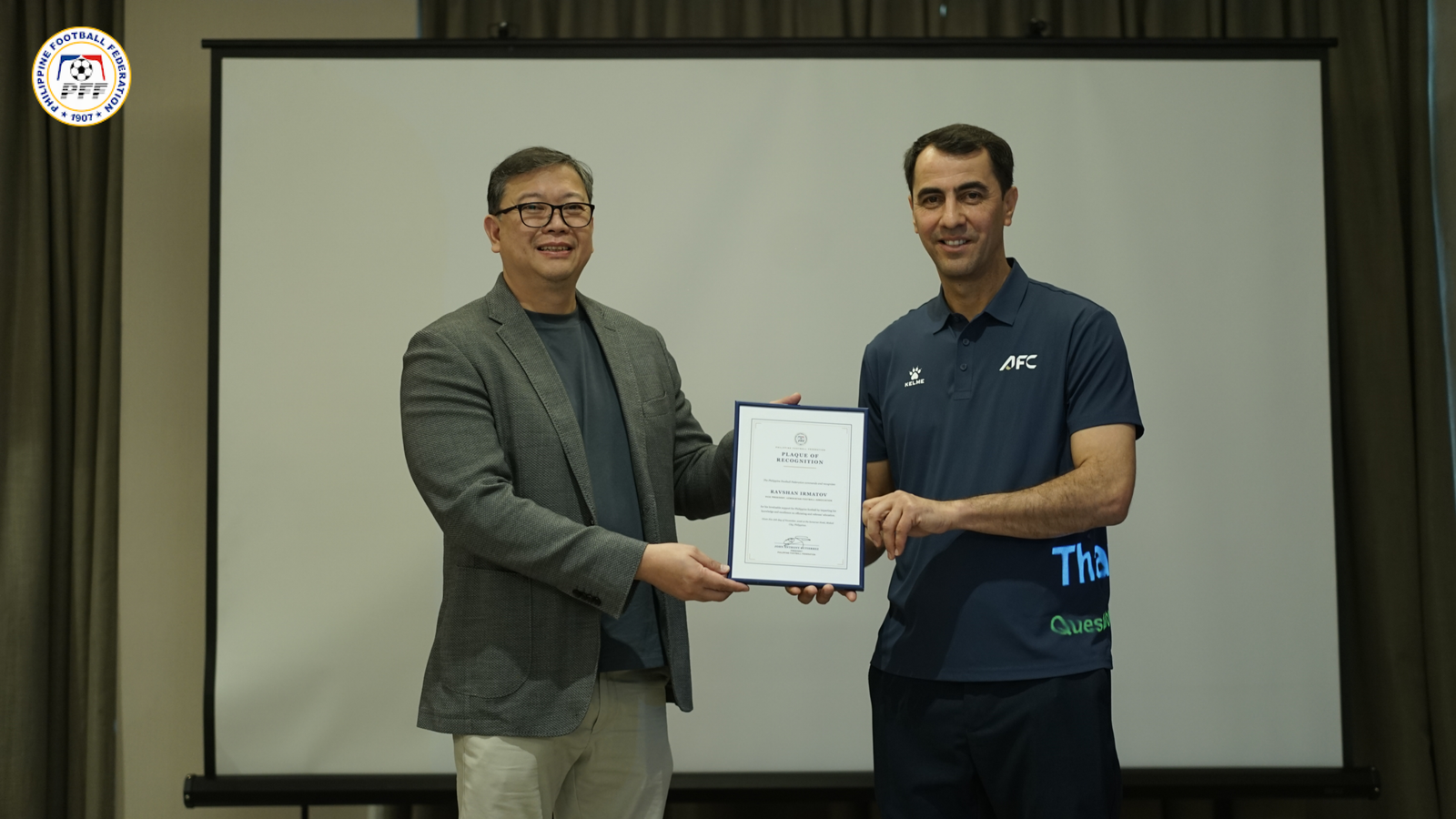
The Philippine Football Federation (PFF) gathered Filipino referees, assessors, instructors, and football leaders on Monday for the seminar “From Experience to Excellence: A Referees’ Learning Session with Ravshan Irmatov,” a talk by one of the most accomplished match officials in football history.
Irmatov, First Vice-President of the Uzbekistan Football Association and a veteran FIFA and AFC referee, spoke before referees across the country, members of the PFF Executive Committee, and the Board of Liga Group Pilipinas, Inc. His invitation reflects PFF’s drive to upgrade and improve Philippine football officiating by bringing its referees closer to the best in the world.
“Excellence in football is never a solo act. It is a chain, and every link depends on the others,” said PFF President John Anthony Gutierrez. “So quality refereeing is a reflection of quality football. And the reverse is also true. A fair, consistent referee protects the integrity of every match, and that integrity builds confidence in our governance, our leagues, and our players.”
Record-setting career
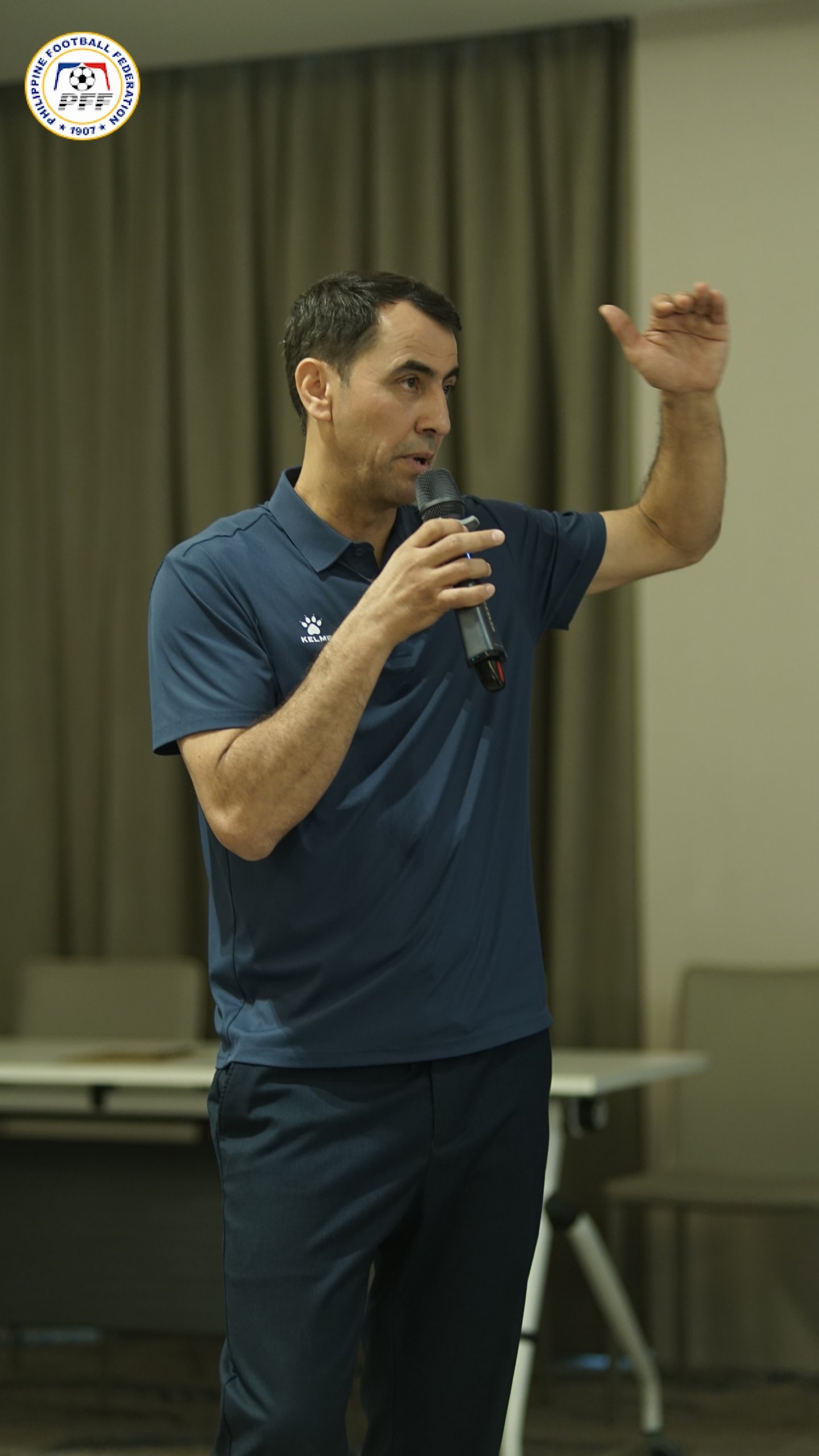
Born in Tashkent, Irmatov refereed internationally from 2003 to 2019. At the 2010 FIFA World Cup in South Africa, he was the youngest referee in the tournament, and he went on to officiate at the 2014 Brazil and 2018 Russia World Cups. Across the three tournaments he took charge of eleven matches, the most of any referee in World Cup history, among them the 2010 semifinal between the Netherlands and Uruguay.
He also officiated at the AFC Asian Cup, the 2012 London Olympics, two Club World Cup finals, and five AFC Champions League finals. He was named Asia’s best referee five times and recognized as the world’s best referee in 2015. Today, he is also Deputy Chair of FIFA’s Technology and Innovation Committee.
“The Philippine Football Federation is incredibly blessed to have this man impart his knowledge to us, right here in Makati,” Gutierrez said.
Fitness
Irmatov opened with his emphasis that top physical and mental condition is the foundation of good referee decisions. Modern football’s transitions are fast, he said, and a referee must match the explosive speed of the players to arrive in the right position at the right time.
“Maintaining top level of fitness permits you to stay in [the] top level because it permits you to minimize your mistakes,” he told the referees. Warning against complacency inside the penalty area, he said, “[the] penalty area is life. [It] is your life. One mistake in [the] penalty area, [you are] finished.”
He urged referees to work with running and sprint-technique coaches, to keep an athlete’s body composition, and to remember that fatigue affects judgment.
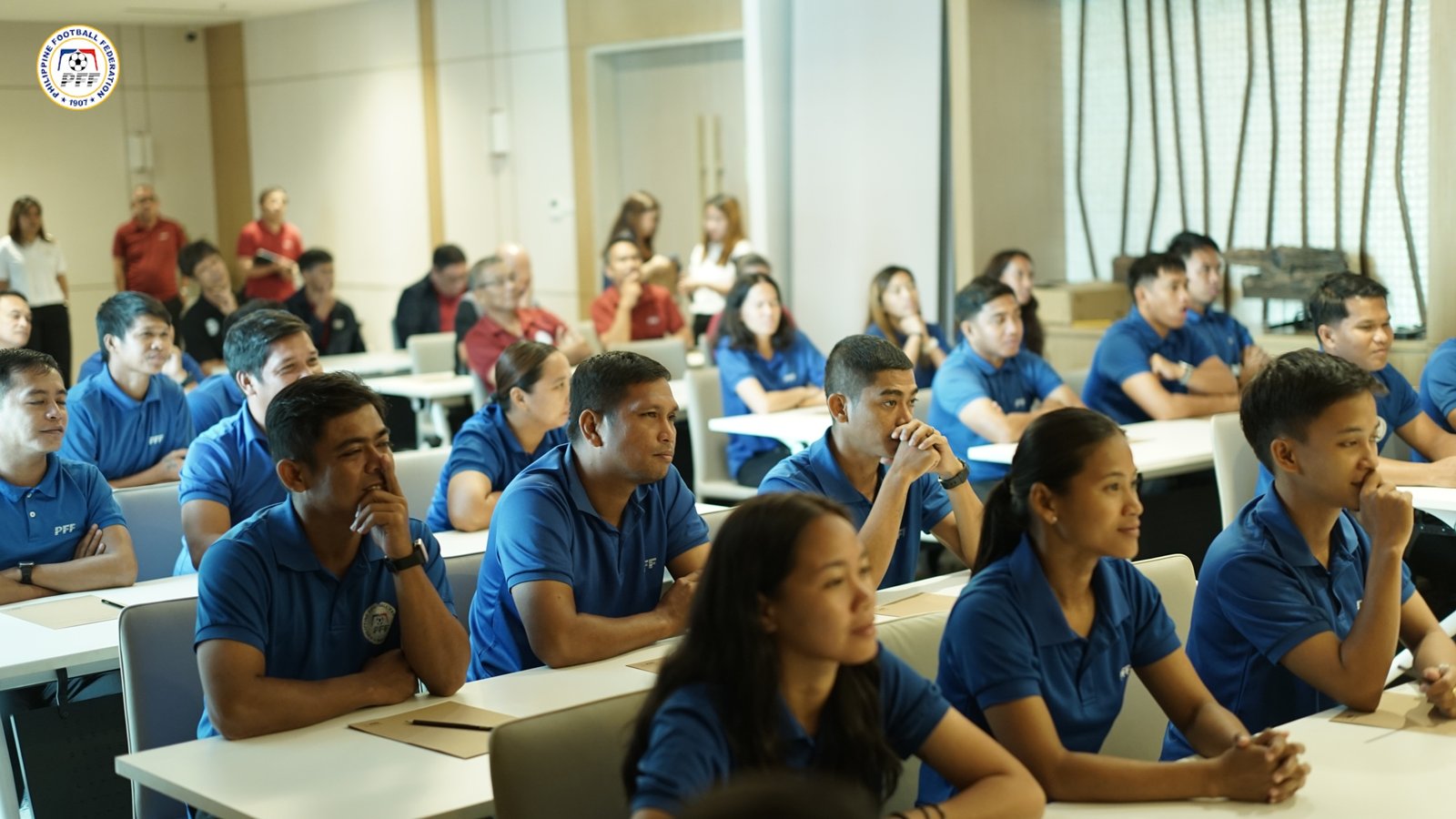
“If your body is tired, your brain is also tired,” he said.
He added that understanding the game matters just as much as referees should apply advantage when an attack has perspective, because, in his words, “football wins” and “football loves hard workers.”
Technology
On video assistant refereeing (VAR), Irmatov said technology is changing football and, with it, referees.
“You have to be better than technology. You have to take your decision on the pitch,” he said, adding, “trust in technology, but [the] decision is yours.” He urged officials to “take courage to [make] difficult decisions” rather than lean on the monitor.
He noted that referees aiming for top international competitions need a VAR license earned in domestic league matches, and said he would discuss with Gutierrez the possibility of introducing VAR in the Philippines. He also offered to help train new Filipino referees in Uzbekistan.
Leadership
Irmatov described refereeing leadership as a mix of personality, communication, integrity, and emotional intelligence. When players boil over, he said, the referee’s role is simple: “Stay calm. Try to cool down the game.”
He called on referees to lead the full match-officials team through a clear routine: 1) Study teams and players beforehand; 2) hold a pre-match briefing that sets roles and scenarios, including for VAR; 3) stay visible and calm during play; 4) and hold an honest debrief afterwards.
“[A] thinking referee means top referee,” Irmatov stressed.
“You are [the] leader,” he said, recalling speaking to Dutch star Arjen Robben before a 2010 World Cup match about simulation through calm but firm words that helped prevent problems on the pitch.
Lessons from world’s best
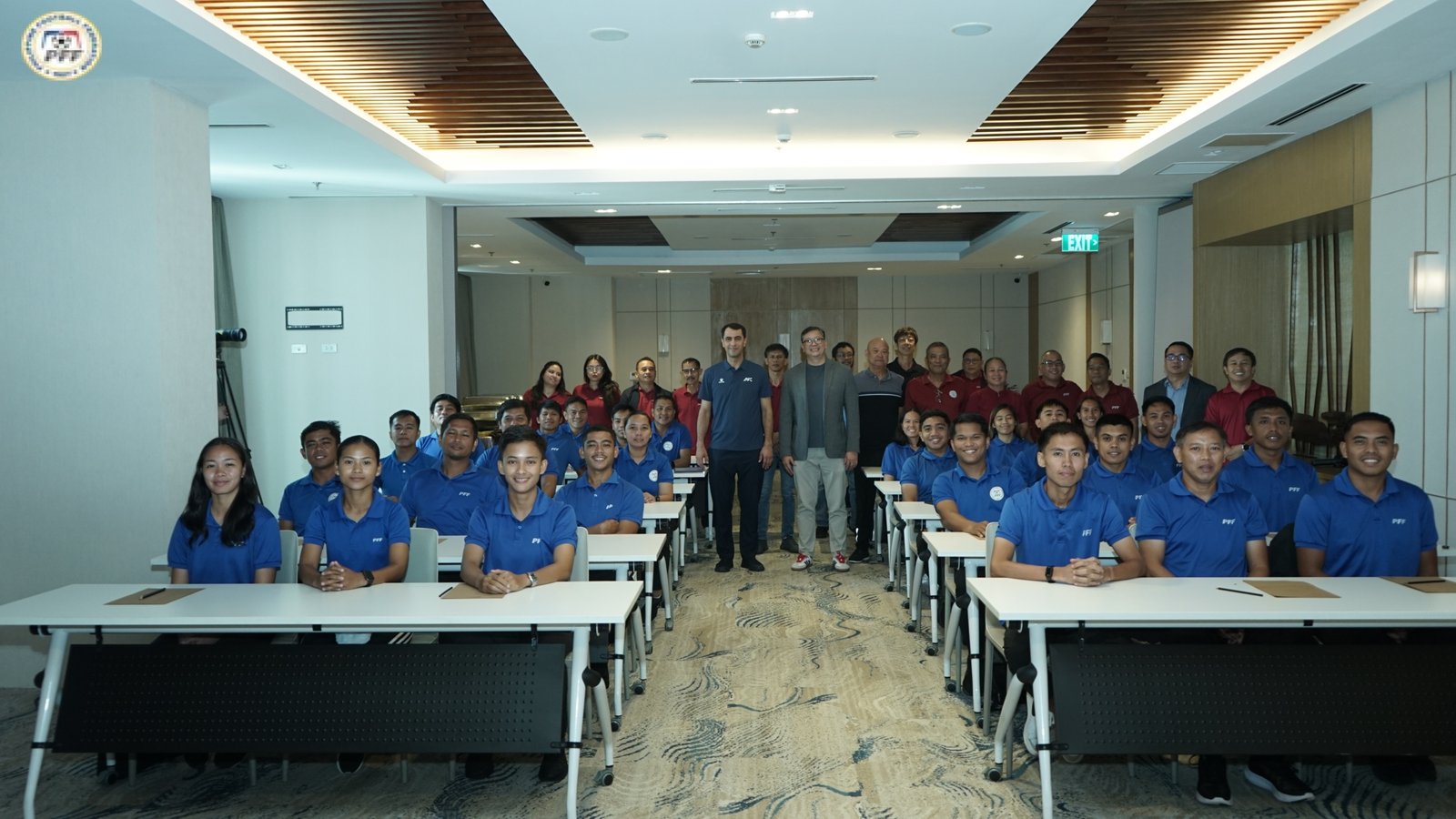
Irmatov encouraged the participating referees to study how World Cup referees work, to use every development tool from instructors to seminars, and to keep notes. He said he still reads notes from seminars he attended 30 years ago. His advice, “Always be [an] example.”
During the open forum, he told participants that World Cup referees hit 93 to 94 percent accuracy in their calls, and that aspiring top-level referees should aim above 90 percent through daily analysis.
Irmatov closed with a hope for Philippine football. “One day I hope a Philippine referee will be in [a] FIFA World Cup.”
