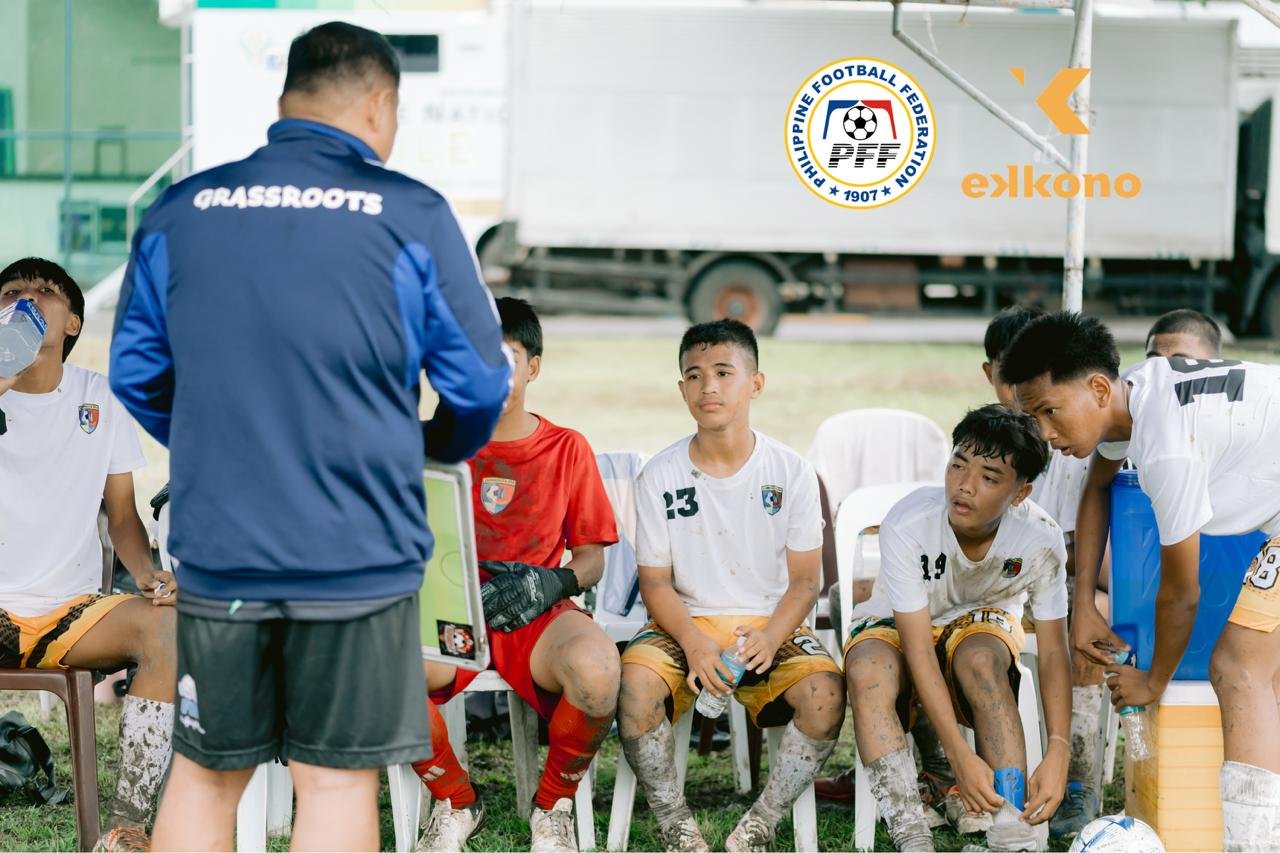
The Philippine Football Federation (PFF) and the global football consultancy Ekkono Method have formalized a landmark partnership designed to elevate the country’s football development system to international standards, with the aim of bridging the gap between the Philippines and the world’s elite footballing nations. Under this collaboration, both organizations will jointly implement a long-term, evidence-based development framework aimed at delivering winning yet sustainable programs for players, coaches, and clubs across all levels of the game.
PFF President John Anthony Gutierrez described the partnership as a transformational step in the Federation’s modernization agenda.
“This partnership represents a significant step forward for Philippine football,” Gutierrez said. “By working with Ekkono Method, we’re bringing internationally recognized expertise to support our vision of developing a uniquely Filipino approach to the game. This collaboration will benefit our players, coaches, and the entire football family across the nation.”
The agreement places the Philippines among an elite roster of countries and clubs that have adopted Ekkono’s development methodology, including Paris Saint-Germain, Inter Milan, the Japan Football Association, the Thailand Football Association, and multiple professional clubs across Europe and Asia.
Under the partnership, PFF and Ekkono will jointly design a holistic football and futsal development model tailored to Philippine realities while integrating global best practices. The framework will cover grassroots participation, talent identification, coaching education, academy development, game-model alignment, and elite player pathways.
Ekkono Method CEO Miquel Farrerons emphasized the country’s potential.
“We’re honored to partner with the Philippine Football Federation,” he said. “The Philippines has tremendous football potential, and we’re committed to supporting the PFF in building a development model that honors Filipino football culture while achieving international standards.”
Sterling track record
The Ekkono Method originated in the 1990s when Spanish coaches Carles Romagosa and David Hernández, working in elite environments such as FC Barcelona and CIDARF, realized that merely winning games was insufficient for true long-term success. They began a deep, research-driven analysis of the world’s best players and elite academies, studying how training, learning, and game interpretation shape football excellence. From this work emerged the first iteration of the Ekkono Method—an approach emphasizing perception, scanning, decision-making, and age-appropriate development across every phase of a player’s growth.
As demand from coaches worldwide surged, the methodology expanded into Ekkono SMART, focusing on coaching mastery. This version trains coaches to become experts in technical and tactical fundamentals, curriculum planning, periodization, and modern didactics—making it possible to develop “smarter players” capable of reading and solving the game.
Recognizing that lasting change must be organizational, not only technical, Ekkono later introduced Ekkono IDENTITY, a framework designed to help federations and clubs define, implement, and sustain a coherent football identity. This includes creating methodology departments, articulating training and playing philosophies, establishing pathways, and ensuring alignment from grassroots to professional levels.
Most recently, Ekkono PROS was developed to support professional coaches in holistic team management, integrating game models, scouting, leadership, communication, personal development, and high-level problem-solving. The system has contributed to success stories such as Aberdeen FC’s cup triumph and IFK Göteborg’s Swedish Cup championship shortly after implementing Ekkono processes.
Ekkono’s track record speaks volumes. At Paris Saint-Germain, the IDENTITY implementation earned the French Football Federation’s Best Academy award for the first time. In Japan with Nara Club, it has bolstered both academy and first-team operations. Similar successes with the China Football Association, Serbia Football Federation, and others demonstrate Ekkono’s ability to adapt to diverse cultural contexts, making it an ideal partner for the Philippines.
These frameworks form the backbone of Ekkono’s collaboration with the PFF.
Impact on Philippine football
With Ekkono’s guidance, PFF will begin constructing an integrated national framework that ensures:
- A unified football identity across all programs and teams
- A modernized coaching education system, emphasizing methodology and decision-making
- Standardized training models for youth, academy, and elite levels
- Evidence-based player development including perception, scanning, and tactical intelligence
- Long-term sustainability through organizational alignment and program continuity
- Stronger elite pathways to help bridge the gap from youth to professional football
- Support for futsal, ensuring an equally structured and modern program
Gutierrez said the goal is clear: build well-oiled systems that will benefit generations of Filipino football athletes, coaches, officials, and leaders.
“If we want to compete with advanced football nations, we need modern structures, not shortcuts. This collaboration provides the technical foundation for Filipino football to finally operate at a strategic, systematic, and sustainable level We’re building a foundation where Philippine football can thrive across eras, and that time is now,” Gutierrez concluded.