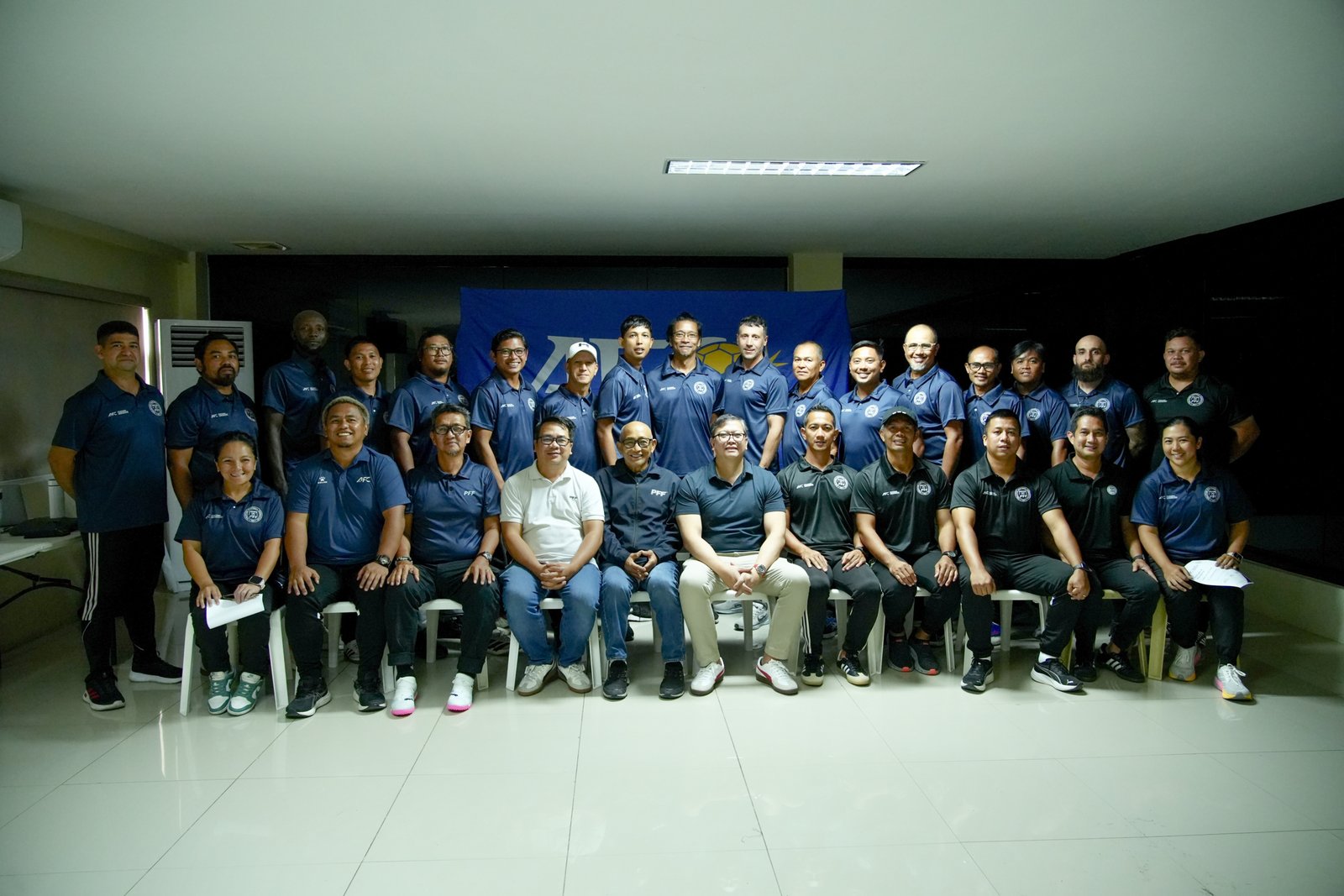
The Philippine Football Federation (PFF) is eyeing to expand its bench of high-level licensed coaches with the recent completion of the AFC/PFF ‘A’ Diploma Coaching Course Part 1, held at the PFF National Training Center in Carmona, Cavite from June 22 to July 2, 2026.
Nineteen coaches took part in the course, drawn from regional football associations (RFAs) and clubs, including two women coaches–former Philippine women’s national football team captain Marielle Benitez and PFF Grassroots and Youth Leagues Coordinator Ayrand Acejas.
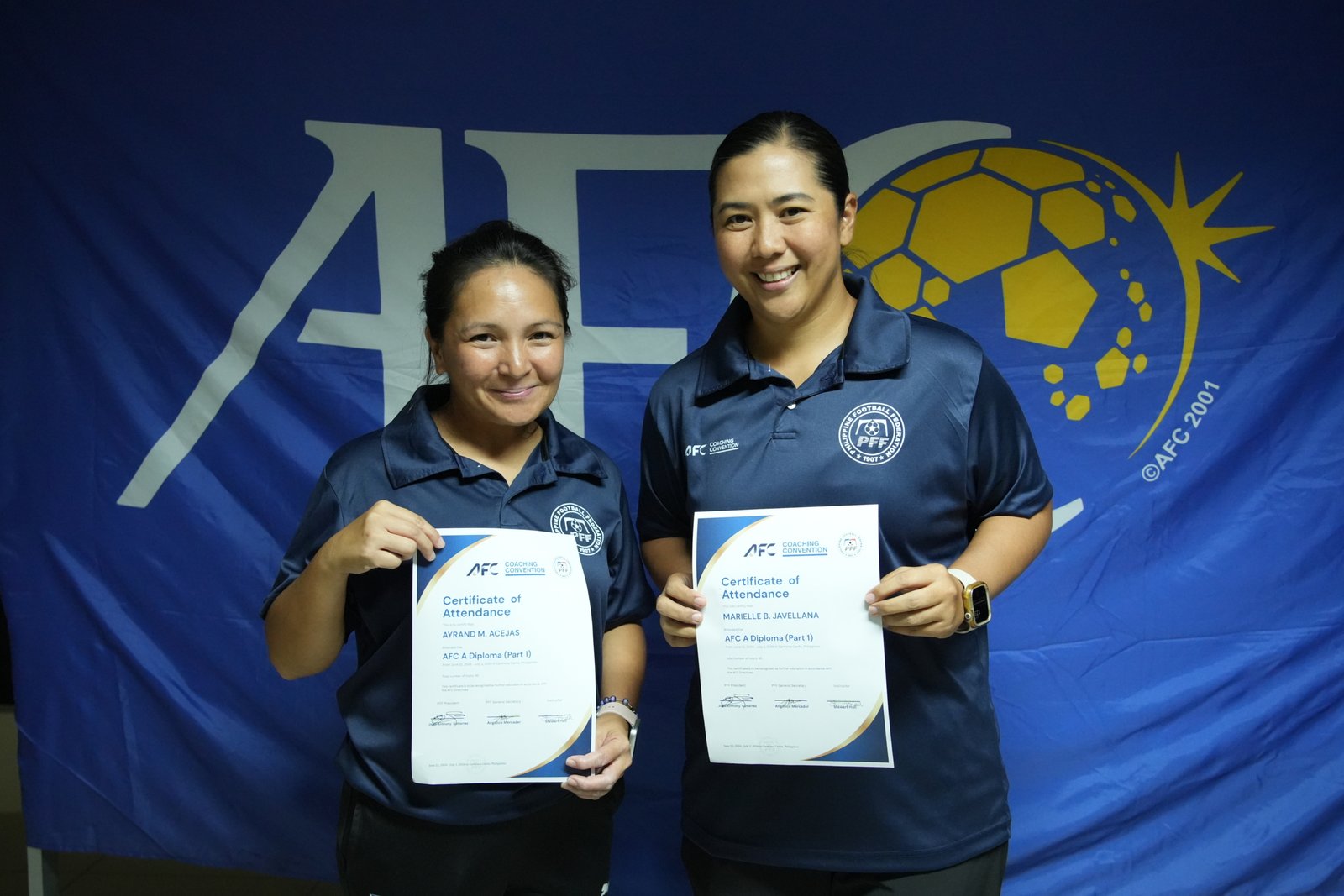
Women coaches Ayr Acejas (left) Marielle Benitez (right) are on track to becoming A licensed coaches.
There are also four foreign coaches in the course coming from Canada, Italy, Armenia, and Ghana.
Upon completion of Part 2, they will move a step closer to holding the AFC ‘A’ License, the certification tier required for coaches to progress toward the elite AFC Pro License.
The course forms a critical pillar of PFF’s technical strategy to grow the ranks of top-level Filipino coaches, part of a broader push to raise the number of ‘A’ License holders across clubs, academies, and regional associations nationwide.
Student-centered approach
“By shifting to a student-centered approach in our coaching education, we are producing coaches who can think for themselves, adapt to real situations, and lead with confidence at every level of the game,” said PFF President John Anthony Gutierrez.
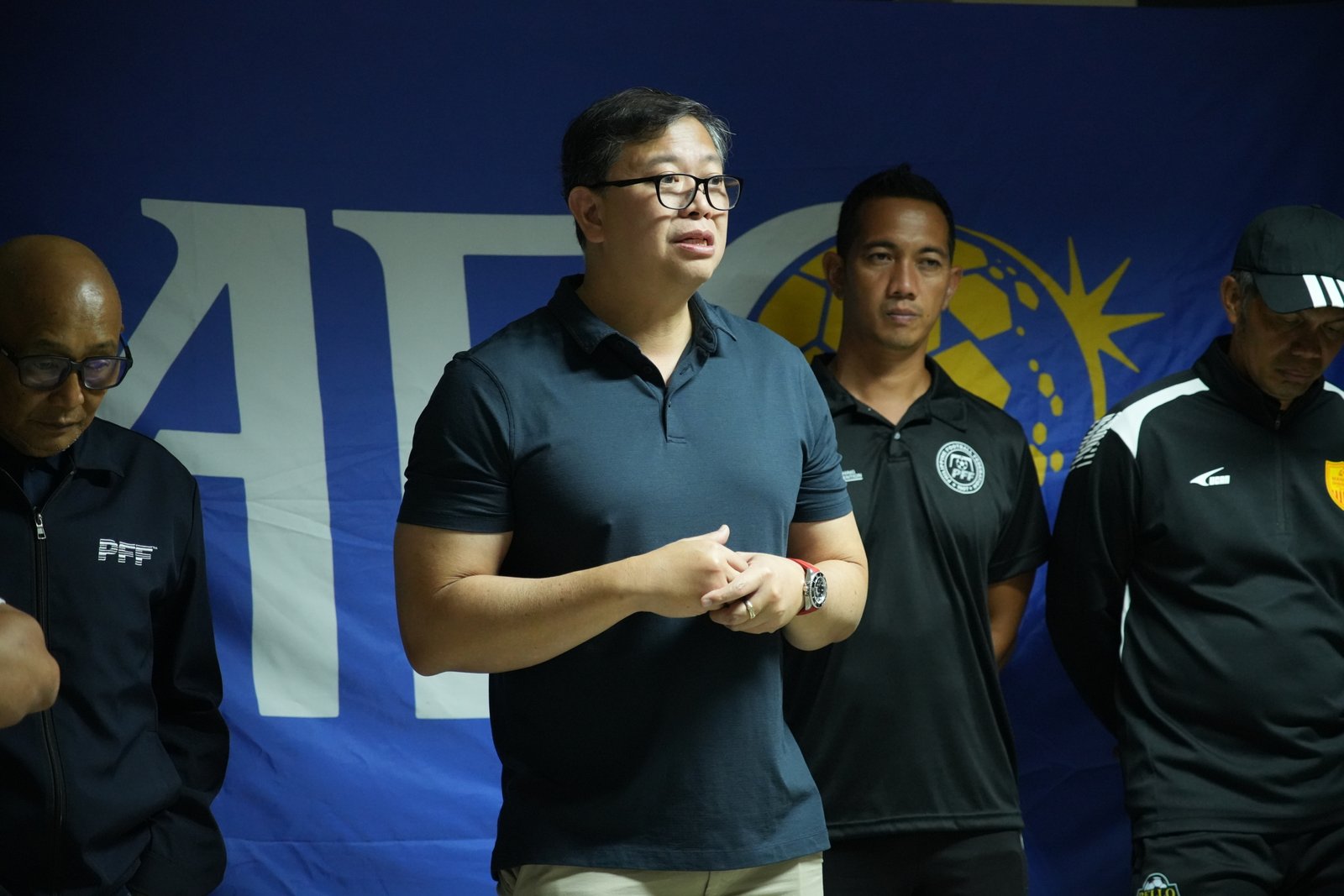
PFF President John Anthony Gutierrez addresses the coaching candidates of the AFC A License Coaching Diploma Part 1.
As part of that effort, to strengthen its Coaching Education Program, PFF has been transitioning from a teacher-centered model to a student-centered learning environment across its coaching courses, including the AFC ‘A’ Diploma pathway.
Under the new methodology, tutors serve as facilitators and mentors rather than lecturers, creating learning experiences that push coaches to discover, analyze, and apply knowledge directly in football contexts.
Courses are designed to be modular and reality-based, allowing coaches to progressively build competencies while connecting course content to the actual challenges they face in their clubs, schools, academies, and communities.
The shift is designed to translate directly to the training pitch. Coaches trained to think independently and solve problems in real time are better positioned to design sessions around the specific needs of their players rather than applying generic templates.
For elite youth and semi-pro players who make up the AFC ‘A’ Diploma’s primary player pool, this means training environments that emphasize decision-making, game understanding, and adaptability over rote instruction — qualities PFF considers essential as these players transition from amateur and semi-professional competition to a professional/national team pathway.
“We want to move away from simply telling coaches what to do, and instead build their capacity to solve problems on their own,” Gutierrez added. “This is how we develop coaches who are not just certified, but genuinely competent, reflective, and innovative.”
Feedback
Some of the coaches expressed their learnings during the ten-day experience.
“Grateful for the opportunity to learn and re-learn. Thankful to PFF, our mentors, tutors, classmates, and athletes for the two weeks of intense football discourse and practicals. Looking forward to Part 2!” Benitez, the Athletic Director of the Philippine Women’s University, stated.
“Every lesson we bring back means better training sessions, better decision-making, and better opportunities for our young footballers,” said Canadian national Hojat Nejadrasoul, who is doing grassroots work in General Santos City.
Fellow Mindanao-based Derrick Derequito of SOCSARGEN RFA expressed his approval of PFF’s new coaching approach: “Mindanao has talent. Our responsibility now is to develop that talent using better coaching methods. The A Diploma challenges us to become better educators, not just better tacticians.”
“These past 2 weeks we’ve been creating session plans, learning from mentors and colleagues, and using the FIFA TSG (Technical Study Group) framework to break down actual World Cup matches the same way analysts at that level do,” said PAREF Southridge head coach and Philippine men’s U17 assistant coach Ryan Fermin. “Still a lot to learn about the beautiful game, but thankful for the growth during this course.”
The course
The AFC ‘A’ Diploma is an advanced 30-day (180-hour) program designed for coaches handling elite youth players aged 17 to 21, amateur teams, and semi-professional environments. Entry requires an active AFC ‘B’ Diploma, at least one to two years of post-certification coaching experience, and a minimum age of 18.
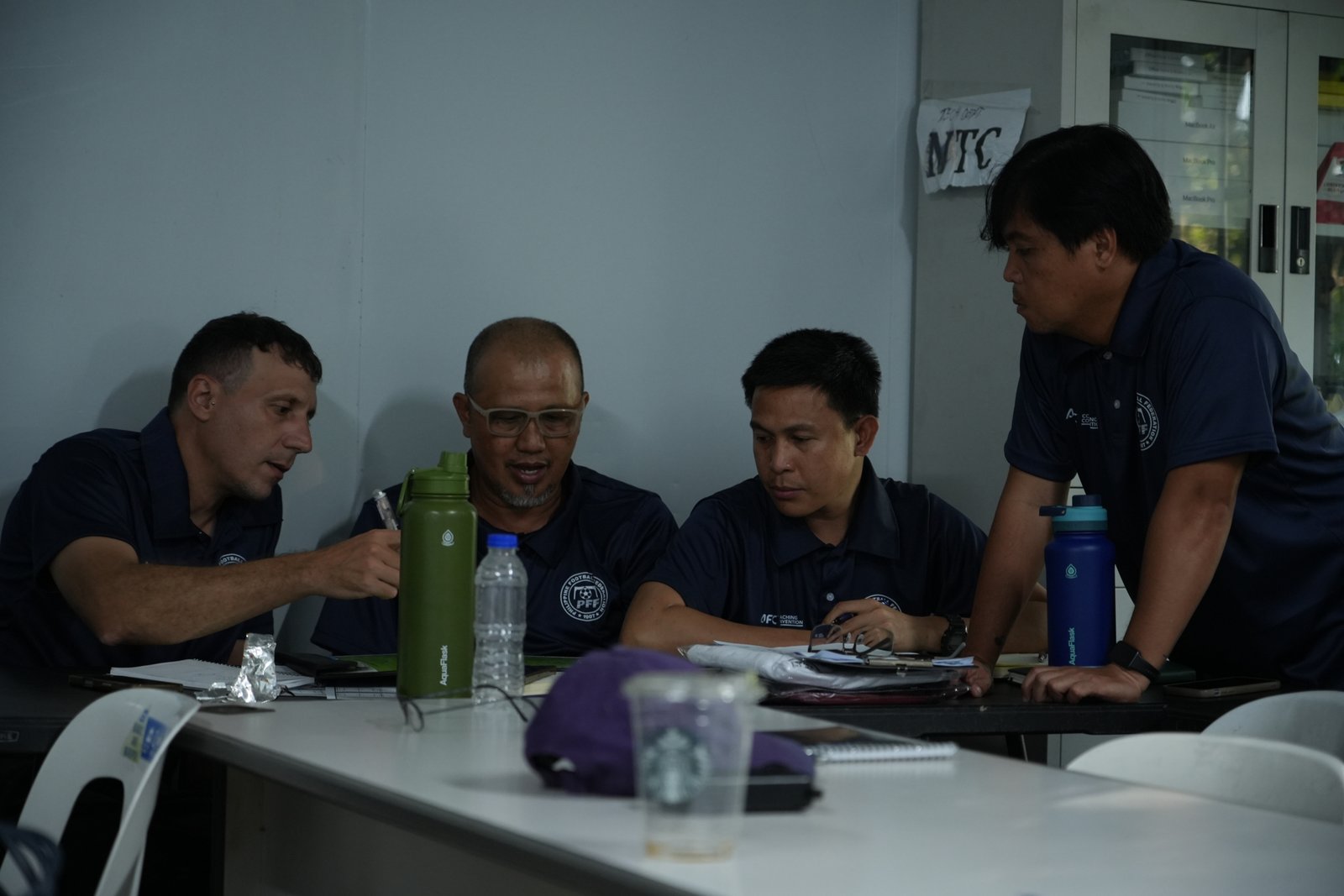
The curriculum covers advanced tactical and technical development, team organization, match analysis, leadership and staff management, and the physiological and psychological needs of players, with assessment through practical coaching evaluations, theoretical examinations, and a final project or dissertation.
By grounding the curriculum in physiological and psychological player needs alongside tactical development, the program aims to equip coaches to manage not just performance but the overall development of the athletes under their charge.
Former Philippine men’s national football team head coach Stewart Hall served as lead instructor, assisted by Ariston Bocalan of the PFF Coaching Education Department.
The 19 coaches are:
- Ayrand Acejas (NCRFA)
- Richard Leyble (La Salle/SOCSARGEN RFA)
- Adrian Payson (Laguna RFA)
- Ryan Fermin (NCRFA)
- Ramtyn Tarin (Laguna RFA)
- Daniel Avakian (PAREF Southridge/Armenia)
- Roxy Dorlas (NCRFA)
- Paulo Intia (NCRFA)
- Bombet Avenido (Butuan-Agusan del Norte RFA)
- Hojat Nejadrasoul (Canada)
- Marielle Benitez-Javellana (NCRFA)
- Eleazar Toledo (Cebu RFA)
- Ayi Nil (Ghana)
- Albert Besa (NCRFA)
- Thomas Costa (Italy)
- Paul Cabio (Cagayan de Oro-Misamis Oriental RFA)
- Jerome Nulo de la Peña (Cagayan de Oro-Misamis Oriental RFA)
- Don Derrick Derequito (SOCSARGEN RFA)
- Adrian Cezar Bequillo (NCRFA)
The second and final part of the course is on January 8 to 20, 2027.