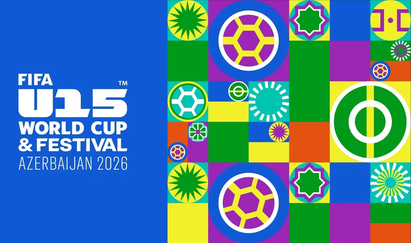
The Philippine Football Federation (PFF) is gearing up to participate in the inaugural FIFA U15 World Cup & Festival in Azerbaijan, a groundbreaking tournament running from October 24 to 30, 2026.
This marks the first time a FIFA youth competition has been opened to all 211 member associations without any qualifying rounds required. The Philippines has been drawn into Group F alongside African sides Morocco and Liberia and North American teams Costa Rica, Curaçao, and Belize.
PFF President John Anthony Gutierrez called the tournament a landmark opportunity for the country’s grassroots football development.
“For our young players, stepping onto a FIFA stage is a very rare opportunity and we intend to make the most of it,” Gutierrez said. “This is a chance to show the world what our Regional Football Associations (RFAs), our youth national team programs, and PFF’s Talent Identification Program from here and abroad have been building together.”
Open to boys born in 2011 and 2012, the tournament will be played in an 8v8 format across 20-minute halves at the Hovsan Competition Complex in Baku, with the opening match and tier finals set for the iconic Crystal Hall.
Nearly 1,000 matches will be contested throughout the event, involving more than 3,000 players, coaches, and officials from around the world. Following a group stage, teams will be placed into one of six performance tiers for a second phase, ensuring every squad continues competing through the tournament’s final matchday.
The Philippine delegation will be assembled by combining standout players identified through the country’s leading RFAs with top performers from the current youth national team setup and from talent identification camps abroad, giving grassroots athletes a chance to compete on the same stage as the sport’s most promising young talents worldwide. Each delegation is allowed up to 20 members, comprising 14 players and six staff covering technical, medical, safeguarding, education, and content production roles.
The tournament’s development-first design includes several rule adaptations from the traditional game, such as rolling substitutions, offside restricted to the final third, and kick-ins in place of throw-ins, all intended to maximize ball touches and encourage attacking, technical play.
The Philippines already has recent experience with the 8v8 format, having introduced it into the 2026 Palarong Pambansa Elementary Boys’ tournament last May in partnership with the Department of Education, an event won by Western Visayas that offered an early glimpse of Filipino youth talent thriving under the format.
Gutierrez emphasized that the Philippines’ participation reflects the payoff of sustained investment in youth football and the integration of the 8v8 format at the community level.
“When you build a strong pipeline from the grassroots up, moments like this become possible,” he said. “Sending a team shaped by our RFAs and our youth national program to a FIFA World Cup event is proof that our system is working, and it’s only the beginning for these young players.”
FIFA has positioned the tournament as a means of giving nations that have historically struggled to qualify for global competitions a genuine platform to test themselves internationally, with a girls’ edition set to follow in 2027 and both tournaments scheduled to become annual fixtures from 2028 onward.