The Philippine Football Federation (PFF) lauds the Philippine Men’s National Football Team (PMNFT) for delivering one their most competitive AFC Asian Cup qualifying campaigns to date, as head coach Carles Cuadrat outlined key takeaways and a forward-looking vision for the program’s continued rise.
PFF President John Anthony Gutierrez commended the national team’s progress and emphasized the importance of sustaining this trajectory.
Our men’s national team has shown that Philippine football is on a clear upward path, with performances that reflect both quality and character This campaign is not the end, but the foundation of something bigger—one that will continue to inspire belief as we strengthen the program and compete at an even higher level.
Under Cuadrat’s guidance, PMNFT achieved its highest points total and goal output in an AFC qualifying group stage, signaling clear progress in both performance and identity. While qualification ultimately proved elusive by just a goal in goal difference, the campaign underscored the team’s growing capacity to compete with Asia’s emerging powers.
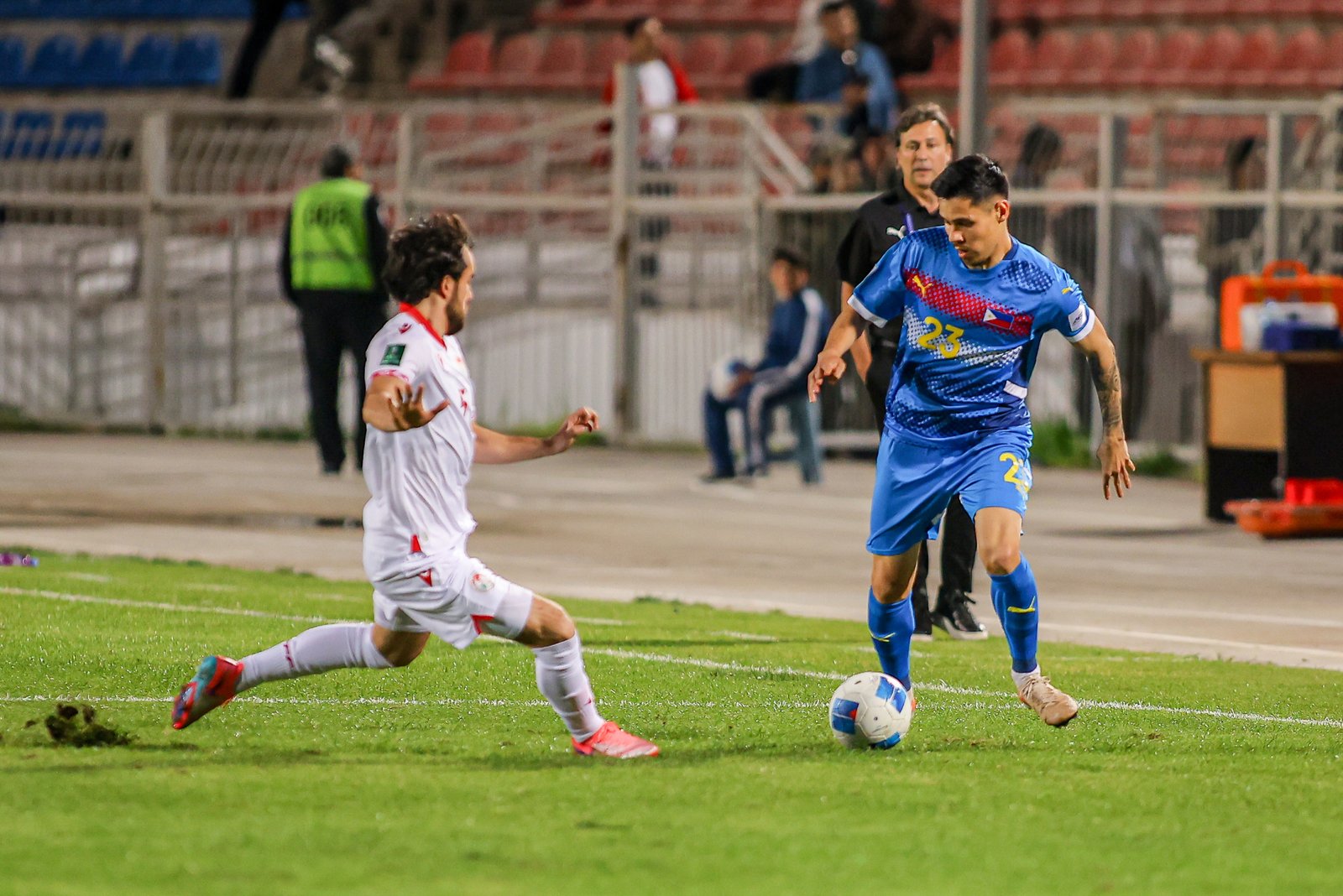
A decisive factor, Cuadrat emphasized, was defensive consistency. Despite generating more clear scoring opportunities in both matches against group winners Tajikistan, the Philippines fell short, in part due to conceding goals in critical moments. Tajikistan, by contrast, maintained defensive discipline—keeping clean sheets against lower-ranked sides Maldives and Timor-Leste—and conceded just three goals across six matches, all scored by the Philippines.
“This is an important lesson for us,” Cuadrat noted in an interview with pff.org.ph. “Keeping a clean sheet is an essential characteristic of a competitive team, and in that sense, our lack of defensive consistency affected our chances of qualifying.”
The narrow margins were evident in the closing stages of their final match, where the Philippines pushed relentlessly for a breakthrough. Late opportunities, including a dangerous delivery from Raphael Obermair narrowly missed by Jeff Tabinas and a close-range attempt from Jarvey Gayoso, highlighted how close the team came to altering the outcome.
Beyond results, the campaign marked a significant step in squad development. Several key players made their national team debuts and quickly established themselves as core contributors, including Randy Schneider (24), Jossef Baccay (24), Andre Leopold (24), and Obermair (30). The pool continues to deepen with promising young talents such as Bjorn Kristensen (23), Sandro Reyes (23), and Dylan Demuynck (21), alongside potential additions like MLS stalwarts Markanich twins (Nick and Anthony, both 26), whose Philippine eligibility is under process.
Cuadrat updated: “We are awaiting the early issuance of the passports of the Markanich brothers, who could greatly strengthen the team.”
He added, “In short, recent and very interesting additions lead us to believe that we have a group of players in a growth phase, who should allow us to compete at a high level in the official tournaments that will be coming up for us in the next few months.”
Cuadrat also credited PFF’s sustained efforts in scouting, logistics, and player integration, noting that recent camps have been conducted with a high level of professionalism. From training bases in Australia, Dubai, and Turkey to strong home support at the New Clark City Stadium, the environment around the national team has significantly improved.
The Federation has worked hard to ensure everything is well prepared. The players understand our system, and after a year together, they are able to quickly execute the tactical requirements we set for each match.
Managing the constraints of the international calendar remains a key challenge, particularly with limited FIFA windows and the difficulty of securing player releases outside official dates.
“Every training camp is different and you have to make the right decisions and choose the best options for each situation. The recent FIFA dates haven’t offered many opportunities to play. Some players travel from the USA or Europe, having to cover long distances, and some play their match on Monday due to the new televised league schedules. This means that many of them wouldn’t be available for that first friendly, which should be played on a Thursday at the latest.”
Cuadrat added:
“Another important reason is finding a suitable opponent that provides a similar tactical approach and performance level to what we’ll face in the official match a few days later. Far more injuries occur in match situations than in training situations. It’s always a risk to lose a key player for an important qualifying match due to an injury sustained four days earlier in a friendly.”
Nevertheless, Cuadrat expressed confidence that continuity within the core members of the squad and the gradual integration of new talent will further elevate the team’s competitive level.
Our team has had [a] consistent core of players for over 12 months, with few changes and very well-defined playing system. They have already mastered the automatic movements of the game, and we know exactly what each one can contribute. They arrive with match fitness and in excellent physical condition, so they don’t need a friendly match in that situation.
Looking ahead, the June FIFA window will be critical, with new players expected to join the setup. Preparations will also begin in earnest for upcoming competitions, including the Hyundai Cup, where the Philippines aims to build on its current momentum.
Given these developments, PFF remains optimistic that the PMNFT is entering a sustained period of growth. As such, the Federation calls on Filipino supporters to continue rallying behind the national team as it builds toward future competitions–such as the 2026 ASEAN Championship-Hyundai Cup in July.
Speaking of the Hyundai Cup, Cuadrat said that “it will be interesting for us to play the two matches scheduled for June during the next FIFA window, to prepare well for the Hyundai Cup tournament with this new group of players.”
In conclusion, emphasized that “we should be optimistic about the future of Philippine football, because we are experiencing a period of growth unlike anything we’ve seen in a long time.”
“Players want to join us because they enjoy the attacking, possession-based style of football we play. The team has climbed in the FIFA rankings, improving more than 15 places in only a year since the start of the group stage… Our hopes are to continue strengthening the team and competing with the heart and skillful play we demonstrated during this last phase. The project is highly attractive and competitive, and we will soon have opportunities to play for the Philippines again and continue making our fans proud of how we represent our country,” Cuadrat said in closing.